Wednesday, August 22, 2007


Craft series: Knitting

It seems like everywhere you look, everyone is knitting, or talking about crocheting, or buying something embroidered…what’s the deal? What’s all the hubbub? It seems like everyone is crazy about knitting, crocheting, embroidery, or any of those wonderful DIY crafty type things.

This week, I’ll chat about knitting. I want to start with knitting because we (the downtown central Library) have just started a knitting circle. You can bring your new or continuing projects every Friday to the 2nd floor from 11-12 and sit around and knit.

Beginnings: Wikipedia states that “[o]ne of the earliest known examples of knitting was finely decorated cotton socks found in Egypt in the beginning of the first millennium AD”.

Books: Do a simple subject keyword search for knitting in our Library catalog. You will find hundreds of books on patterns, how-to, and history, including 2007’s Men who knit & the dogs who love them : 30 great-looking designs for man & his best friend. You can also scan the bookshelves in any of our Libraries in the call number area 746s.

Who’s doing it: If you’re in Austin, you’re in good company when it comes to knitting! The Internet has had a hand in bringing crafts such as knitting, crocheting and embroidery back in a big way. There are tons of blogs, websites, guilds, and other fun stuff online. Here are a couple for the locals:
Austin Knitter’s and Crocheter’s Guild
Austin Knitting and Crocheting Meetup Group

Monday, August 20, 2007

How to Log In into My Account


We recently posted a survey with questions for users that would help us improve the Library Web Site. Many of the suggestions and comments concerned the catalog. In response to these comments we will be adding new features, such as easy format searching, to the catalog in the near future. One complaint that we saw over and over - having to log in repeatedly when using the My Account features - can be addressed now. If you log in in the top right-hand corner of the FindIt page, you will not have to log in again during your session. Or, from the Library's homepage, click My Acccount, and then log in in the top right had corner before you click on Review or Renew. For more help with the catalog, please see the Catlaog FAQs on the Findit homepage.

Login in the upper right hand corner of FindIt and place holds on some new DVDs.

Babel
Blood Diamond
Borat
Children of Men
Freedom Writers
Miami Vice
Night at the Museum
The Pursuit of Happyness
The Queen

Friday, August 17, 2007

Unusual libraries, unusual places


When you think about a library, you probably imagine a building located in the middle of a city, right? Well, sometimes libraries defeat our imagination and we can find them in the most unusual places.

This is the case of the Bibliometro, a project that the Department of Libraries, Archives and Museums of Chile put in practice more than 10 years ago. It consists of small libraries located in eight different metro stations around the city of Santiago, where people can check out books to read while they commute every day. Bibliotrenes (Book Trains) is another program implemented by this department. For this project they remodeled two old train wagons and transformed them into two libraries located in two of the busiest parks in the city.

The local government in Barcelona has also been trying to implement something new like libraries at the beach, pools, rivers, public parks and plazas. The idea is to bring libraries to places where people usually read and make the books more accessible to patrons. In Alicante, Spain, one can also find a library located in the city market.

Do you know of any library located in an unusual place? Share it with us!!!

Wednesday, August 15, 2007

Literary Austin

Essays, fiction, and poetry reveal the variety of literary responses to Austin through the decades in the new collection titled Literary Austin. As the author states, the book will be something of a nostalgia trip, or for newcomers, a revelation.


Part One - The Seat of Future Empire
Part Two - City of the Violent Crown 1900s - 1940s
Part Three - This True Paradise on Earth: 1950s
Part Four - An Oasis for Mind and Body: 1960s
Part Five - Austin is the Heart of Texas:1970s
Part Six: Austin is a Happy Place, Sort of: 1980s
Part Seven: Our Scruffy Eden: 1990s - 2006

For more Austin memories, please see the Recommended Reading list for the 2005 Mayor's Book club choice Writing Austin Lives.

Monday, August 13, 2007

The World Without Us


The World Without Us, a new book by Alan Weisman, offers an utterly original approach to questions of humanity’s impact on the planet: he asks us to envision our Earth, without us. In this far-reaching narrative, Weisman explains how our massive infrastructure would collapse and finally vanish without human presence; which everyday items may become immortalized as fossils; how copper pipes and wiring would be crushed into mere seams of reddish rock; why some of our earliest buildings might be the last architecture left; and how plastic, bronze sculpture, radio waves, and some man-made molecules may be our most lasting gifts to the universe.(book description)

Another way to try to understand our impact on the planet, is to read fiction about global warming or biotechnological catastrophe. Please check out these eco-thrillers listed below:

Forty Signs of Rain by Kim Stanley Robinson
Fifty Degrees Below Kim Stanley Robinson
Sixty Days and Counting Kim Stanley Robinson

Black Leopard by Steven Voien
Bones of Coral by James Hall
Dead Game by Kirk Russell
Desert Burial by Brian Littlefair
The Green Trap by Ben Bova
Greenhouse Summer by Norman Spinrad
The Ice by Louis Charbonneau
Ill Wind by Kevin Anderson
Minutes to Burn by Gregg Hurwitz
Shell Games by Kirk Russell
The Swarm by Frank Schatzing
Zodiac: the Eco-thriller by Neal Stephenson

Friday, August 10, 2007

Classics rewritten


Classic novels are deemed so for their timelessness, impressive writing style, and memorable characters, plots, and themes. In the following pairings, authors have taken a character or plot from a classic title to create their own original works:

Mrs. Dalloway by Virginia Woolf
The Hours by Michael Cunningham

The Decameron by Giovania Boccaccio
Ten Days in the Hills by Jane Smiley

The Iliad by Homer
Ilium by Dan Simmons

Great Expectations by Charles Dickens
Jack Maggs by Peter Carey

Huckleberry Finn by Mark Twain
Finn by John Clinch

Wuthering Heights by Emily Bronte
Here on Earth by Alice Hoffman

Wednesday, August 08, 2007

Catalysts for reform

The novel is often used as a means of social protest. Authors use fictional characters to inform and inspire the public to fight injustices, gain sympathy for their causes, or just to initiate a debate. Many of these novels become classics, such as Animal Farm, Beloved, Catch-22, and The Jungle. An excellent reference for more information on the subject is Social Protest Literature: An Encyclopedia of Works, Characters, Authors, and Themes available at the Faulk Central Library. Below are a few titles highlighted in this book:

Monday, August 06, 2007

Maupassant short stories to cool the summer

On August 5, 157 years ago, Guy de Maupassant was born. He is considered one of the most notable French writers of the 19th century. Because of his particular way of writing, he has been considered one of the fathers of modern short story. During his youth, while living in Paris, he found a mentor in the writer Gustave Flaubert. Maupassant also had the opportunity to meet other great writers like Émile Zola and Ivan Turgenev. He wrote novels and poems, but his short stories are the ones considered masterpieces.

Short stories in general are refreshing and entertaining. Sometimes, short stories have the capacity to impact you so quickly that you will feel your head spinning, but believe me, it is worth it! So, if you are looking for something stimulating and new to read this summer, how about some short stories?

If you would like to read something by Guy the Maupassant, here we have some recommendations for you:

Friday, August 03, 2007

Wikiwiki, what's a wiki?

We’ve all seen, heard about and even used Wikipedia and other Wikis, but what does Wiki mean? Well, wikiwiki means “quick” in Hawaiian. A wiki is a place online where anyone can access and edit it. Thus, Wikipedia is an encyclopedia online that anyone can edit and write to. You may have written something in a particular section of Wikipedia or you may have noticed glaring mistakes in Wikipedia. Don’t be afraid, go in there and correct the mistakes! That’s the whole nature of Wikipedia. It’s an encyclopedia for all of us.

There are also other wiki’s online, try Wikitravel, a “project to create a free, complete, up-to-date, and reliable world-wide travel guide.” A favorite of mine is LyricWiki, a free site to get reliable song lyrics. Then, of course, there’s Wiktionary, a collaborative, multilingual dictionary. Oh! Check out TV IV! It’s a “compendium of television knowledge”! You can see a list of some of the largest wikis out there by going here: http://meta.wikimedia.org/wiki/List_of_largest_wikis.

How about creating your OWN wiki? You can do that too. There are several places you can do that, PeanutButterWiki, Socialtext, Wetpaint, and Wikia. Try one out!

Wednesday, August 01, 2007

A novel in letters

Epistolary novels tell stories through letters written by one or more characters. Samuel Richardson's Pamela (1740) is considered to be the first of this genre. While this literary technique is not as popular as it once was, it is definitely still around today. In an effort to stay current, authors are now incorporating email, IM, and chat to convey their characters' innermost thoughts and to present different characters’ point of view. Here are just a few of the epistolary novels available at the Austin Public Library:

Monday, July 30, 2007

Home-based Businesses


An article from BusinessWeek Online presents an interview with Manvinder Saraon, vice-president of marketing and business development at Homestead Technologies, about the company's home-based business ideas for 2007. Saraon explains how they determined which home-based businesses have the greatest potential in 2007. Two of the suggestions are: offering children’s art classes, and organizing garages.

If you are interested in starting a home business, please check out these titles.

Home Business Tax Deductions: Keep What You Earn 2006
Home-based Bookstore 2006
Legal Guide for Starting & Running a Small Business 2005
Home-Based Business for Dummies 2005
The Work-at-Home Sourcebook 2005
The 200 Best Home Businesses 2005

To find articles on home-based businesses from US newspapers and magazines, please see the Library database Factiva.

Friday, July 27, 2007

Best-selling Nonfiction


More and more readers are beginning to enjoy nonfiction, not just for the information it imparts, but for reading pleasure. David Carr, a librarian at The University of North Carolina says that “nonfiction addresses our memories, our curiosities and unfinished questions, and our hopes to learn about something remarkable and real, something transforming and true, something lost and something discovered.” (“Many Kinds of Crafted Truths: An Introduction to Nonfiction.” Nonfiction Readers’ Advisory (2005)

Some popular nonfiction favorites at APL have been The Tipping Point,
Freakonomics, The World is Flat, Three Cups of Tea, Animal, Vegetable, Miracle, and Omnivore's Dilemma. The Tipping Point, for example, is a great science book for all ages. I suggest that you read it aloud to family and friends to start a lively discussion.

The Library's Good Reads nonfiction page has a list of top nonfiction books by year, a list of contemporary memoirs, and books devoted to obscure topics. David Carr also has created a list of his favorite nonfiction.

Wednesday, July 25, 2007

A New Book of Quotations


The Yale Book of Quotations

Library Journal: "This collection of 12,000 quotations is a real treat! The quotes range over literature, history, popular culture, sports, computers, science, politics, law, and the social sciences, and although American quotations are emphasized, the book's scope is global. The authors represented are as diverse as William Shakespeare, John Lennon, Jack Dempsey, both Presidents Bush, J.K. Rowling, Rita Mae Brown, Confucius, Warren Buffet, and Deng Xiaoping."

I have selected a few of my favorite quotations from the book and included a related title in the APL collection for each person.

J. Robert Oppenheimer
US physicist, 1904-1967
"When you see something that is technically sweet, you go ahead and do it and argue about what to do about it only after you have had your technical success. That is the way it was with the atom bomb."
American Prometheus; the Triump and Tragedy of J. Robert Oppenheimer by Kai Bird

Walker Percy
American Writer, 1916-1990
"The fact is I am quite happy in a movie, even a bad movie. Other people, so I have read, treasure memorable moments in their lives."
The Moviegoer by Walker Percy

Philip K. Dick
American Writer, 1928-1982
“Reality is that which when you stop believing in it, it doesn't go away.”
A Scanner Darkly by Philip K. Dick

Julian Barnes
British Writer, 1946-
“Books say: she did this because. Life says she did this. Books are where life is explained; life is where things aren't."
Arthur & George by Julian Barnes

Tom Waits
American singer-songwriter, 1949-
“I'd rather have a bottle in front of me, than a frontal lobotomy.”
Real Gone by Tom Waits


For more quotation sources, please see APL’s Quotation Locator Research Guide.

Monday, July 23, 2007

How to Get the Health Care You Want

When faced with our own or a family member’s health problems, our first priority is locating a skilled doctor and all the information about the illness that is available. The Austin Public Library offers many resources that can assist you.

Our health research databases provide up-to-date health care information from sources you can trust. You can access articles from medical journals, encyclopedias and other reference books as well as images, diagrams, drug and herb information, fact sheets, and pamphlets. Use your library card to access the databases from home!


On Tuesday, July 24th at 6:00 p.m., the Central Library will host a discussion with Laura Casey, the author of How to Get the Health Care You Want: The Savvy Consumer's Guide to Navigating The Health Care System. The book stresses that that we as consumers have a right to demand excellent customer service from our health care professionals, just as we would from any other business or service provider. Ms. Casey will discuss the importance of creating and maintaining one’s own medical records and answer questions about the health care system.


In addition to this title, we have plenty of related books to choose from:

Friday, July 20, 2007

"One giant leap for mankind”

Today marks the 38th anniversary of the first manned Moon landing. Three United States astronauts, Neil Armstrong, Edwin “Buzz” Aldrin, and Michael Collins, set off on the Apollo 11 mission on July 16th, 1969. On July 20th at 4:18 p.m. U.S. Eastern Daylight Time (EDT), the Eagle lunar landing module touched down on the Moon. Armstrong stepped out of the Eagle at 10:56 PM EDT with Aldrin following behind. Collins remained in the orbiting Command Module Columbia until Armstrong and Aldrin’s return 21 hours and 36 minutes later. During the mission, the two astronauts gathered rocks, took photographs, set up scientific instruments, planted an American flag, and left a plaque reading "Here Men From Planet Earth First Set Foot Upon The Moon. July 1969 A.D. We Came In Peace For All Mankind." The crew returned to Earth four days later on July 24th and then spent 18 days in quarantine to insure that they were not contaminated by lunar microbes. Over half a billion people world wide watched this momentous occasion on television and an estimated million watched the launch firsthand.

For more information, check out the NASA web site or one of these Austin Public Library resources:


Tuesday, July 17, 2007

Blog anniversary: a message from the editors


“Time flies when you are having fun” is the old proverb. It is surprising for us to already be celebrating our first blog anniversary! It seems that we just started talking about this project, opening our blog accounts, and posting our first entry. So, this time we wanted to post a brief message from our blog editors to you:

Aleph: This is one of the projects that I enjoy the most at the library. I love looking for interesting information to post in our blog, but I would also like to hear more from the public, their opinions and suggestions. So, don’t be shy! We love to hear from you!

Oracle: I have really enjoyed writing and reading other librarian’s submissions to the Traveling Librarian blogs. It is so interesting to hear what other libraries have to offer and see the wonderful photos!

Evelyn Carnahan: I enjoy hearing about something interesting then writing a blog post to share with our reading public. I hope to one day start a Library Music Blog. Living in the “Live Music Capital of the World”, how fitting would that be?! As Aleph, I’d also like to hear more from our readers, post comments and suggestions!

La Princesse de Cleves: La Princesse de Cleves (1678) is considered by many literary historians to be the first modern novel. I chose this name because I enjoy writing blogs about books. We always appreciate your book suggestions, and we have plans to allow customers to add their own reviews of items in the catalog.
Thank you all for your support!

Monday, July 16, 2007

Black Swans


The Black Swan is the most social and least territorial of all swans. The non-migratory birds nest in rather loose colonies in Australia, New Zealand, and Sweden. The world thought swans were just white until Australia was colonized in 1697. Black Swans begin their lifelong partnership shortly after they become a year old. Both male and female Black Swans share in the incubation duties.

I have listed some interesting titles that include black swan in the title or as the subject matter, including nonfiction, fiction, and a music cd.

The Black Swan: the Impact of the Highly Improbable
Nassim Taleb
An applied statistician calls rare, life-changing events that have massive impact "black swans".

The Medici Giraffe: And Other Tales of Exotic Animals and Power
Marina Belozerskaya
Author surveys history for arresting tales of black swans, giraffes, and other exotic animals.

The Black Swan: Memory, Midlife, and Migratory Birds
Ann Batterson
In spare, well-crafted prose, this mid-life memoir recounts a cross-country trip alone in a VW bus to look at migrating birds. The book shares both title and theme with Thomas Mann's novel about a woman's fear of aging.

The Black Swan
Mercedes Lackey
In this re-telling of the German folktale, Odile, the daughter of a vengeful sorcerer, lives on an isolated medieval estate with her father's prisoners, unfaithful young women who are swans by day and human while the moon shines.

Black Swan Green: a Novel
David Mitchell
Charming study of a time and a place: small-town England in the early 1980s, seen through the eyes of a boy stranded in the hot zone of adolescence.

White Swan, Black Swan: Stories
Adrienne Sharp
Former dancer explores both the exultation and the physical and emotional stresses of professional ballet.

Hang on Little Tomato
Pink Martini
“Song of the Black Swan”
Lush instrumental by Brazilian composer Heitor Villa-Lobos.

Thursday, July 12, 2007

Traveling Librarian visits Sydney and Brisbane, Australia

I attended the Fifth International Indigenous Librarians’ Forum: Culture, Knowledge and Future in Brisbane, Australia, June 4th-7th, 2007. The conference brought together the aboriginal people of Australia, the first Nations people of Canada, and the indigenous people of New Zealand and the United States. Presentations were devoted to four topics - culture, knowledge, sharing, and future. We were immersed into the aboriginal culture by visiting nearby Stradbroke Island to visit the Quandamooka tribal community for sharing of local foods, cultural dances, and artwork. We also visited the Dunwich Community Library, very small but used by many!

The conference was hosted by the State Library of Queensland and the Aboriginal & Torres Strait Islander Library & Information Resource Network, Inc. (ATSILIRN). The state library is located on the South Bank of Brisbane, recently opened November 2006. Its modern architecture was designed by Donovan Hill and Peddle Thorp. The collection contains over 3.5 million items!


Consisting of five floors, the first floor, called the I-Zone housed public computers and some aboriginal art. The second, third, and fourth floors housed the music collection, periodicals, new books, periodicals, microfilm and reference. The fifth floor was administrative offices. I especially enjoyed the exhibit room used for displays and author readings looking out over the river.

Visit the State Library of Queensland Website: http://www.slq.qld.gov.au/

Wednesday, July 11, 2007

New Seven Wonders of the World

The New Seven Wonders of the World were announced in Lisbon, Portugal on, appropriately enough, 07/07/07. The New7Wonders Foundation hosted the survey which nearly 100 million people voted on worldwide by web, SMS and telephone. The winners were:

  • The Great Wall, China
  • Petra, Jordan
  • Christ Redeemer, Brazil
  • Machu Picchu, Peru
  • Chichén Itzá, Mexico
  • The Roman Colosseum, Italy
  • The Taj Mahal, India

The original Seven Wonders of the World are the Pyramids of Giza, Hanging Gardens of Babylon, Statue of Zeus, Temple of Artemis, Mausoleum of Halicarnassus, Colossus of Rhodes, Pharos of Alexandria.

Check out these items to find out more about these and other wonders:

Monday, July 09, 2007

Furry staff members


If you had the chance to visit Little Walnut Creek branch you probably met Junie and Ramona. They have beautiful long brown and black hair, and they are the only ones allowed to eat in the library. Of course we are talking about Junie and Ramona the guinea pigs!!! Their names are inspired by the juvenile fiction book characters Junie B. Jones created, by the writer Barbara Park and, Ramona Quimby, protagonist of a series of books by Beverly Cleary.

But Little Walnut Creek is not the only library in the country that has “furry staff members.” Dewey Readmore Books was the resident of the Spencer Public Library in Iowa for 18 years. A staff member found him in the book drop with his paws frozen a cold morning. Since then, he has been one of the most famous library pets in the United States. Tourists often included this library in their trips so they could meet Dewey. He received mail and still has a fan club.

Ocean Shores Library in Washington has Olivia and Waldo, two beautiful cats welcoming patrons. Azle Public Library in Azle Texas has Molli, the cat as their library pet.

If you haven’t met Junie and Ramona, you will have to wait until December when Little Walnut Creek reopens, but if you are planning on traveling nationwide or even abroad, why don’t you check the following map? You might be visiting a town where the library is the home of a celebrity pet: http://www.ironfrog.com/catsmap.html.

Friday, July 06, 2007

Raku: pottery to enjoy!


Raku is one of many kinds of Japanese pottery; it is characterized by using low temperatures to fire the clay and lead glazes. The combination of both fire and smoke create distinctive patterns and texture on the external surface of the pottery. This kind of technique started in the second half of the sixteenth century and its name originates from the place from which the clay for this kind of pottery was dug, in Kyoto, Japan.

Ceramic artists from all over the globe have been trying new variations in the techniques of Raku pottery. In United States, Paul Soldner is the pioneer of what is known as the American form of Raku.

If you want to have a better idea of this pottery technique, you can visit our display of Raku pottery made by one of our talented staff members here at the Faulk Central Library. The display is located on the first floor and if you want to know and read more about it, we recommend the following resources for you:


Tuesday, July 03, 2007

Happy Fourth of July!

The Fourth of July brings fireworks, picnics, BBQs, parades, flags, and patriotic music all to commemorate the passage of the Declaration of Independence by the Continental Congress on July 4, 1776 in Philadelphia. According to the Funk & Wagnalls New World Encyclopedia, “the holiday was first observed in Philadelphia on July 8, 1776, at which time the Declaration of Independence was read aloud, city bells rang, and bands played. It was not declared a legal holiday, however, until 1941.”

Don’t miss the Austin Symphony Orchestra performing its traditional Independence Day Concert at 8:30 p.m. July 4 at the Northeast Triangle of Zilker Park (Lou Neff Point) with fireworks beginning at 9:30 p.m.

Please note that all Austin Public Library locations will be closed on July 4th, but will reopen on Thursday, July 5th at 10:00 a.m. Check out these patriotic books if you just have a hankering for more after the holiday:

Monday, July 02, 2007

Self-Help Award Winners


Cupcake Brown, author of Piece of Cake

Last February, the New York Chapter of the Multiple Sclerosis Society announced the winners of the 2006 Books For A Better Life Awards, which honor titles and authors of motivational and self-improvement titles. The Library owns all the titles, because we know from our own experience, there is always room for improvement!

The Books For A Better Life Awards winners are:
Suze Orman First Book: A Piece of Cake: A Memoir by Cupcake Brown
Childcare/Parenting: Packaging Girlhood by Sharon Lamb and Lyn Brown
Inspirational Memoir: A Three Dog Life by Abigail Thomas
Motivational: CrazyBusy; Overstretched, Overbooked, and About to Snap: Strategies for Coping in a World Gone Add by Edward M. Hallowell, M.D
Personal Finance: The Number : A Completely Different Way to Think About the Rest of Your Life by Lee Eisenberg
Psychology: Social Intelligence: the New Science of Human Relationships by Daniel Goleman
Relationships: The Faith Club; a Mulsim, Christian, Jew - Three Women Search for Understanding by Ranya Idliby, Suzanne Oliver and Priscilla Warner
Spiritual: Yearnings: Embracing the Sacred Messiness of Life by Irwin Kulwith and Linda Loewenthal
Wellness: What to Eat by Marion Nestle

Friday, June 29, 2007

Canada Day!

This Sunday, July 1st is Canada Day. This national holiday, proclaimed in 1867, celebrates the “union of the British North American provinces in a federation under the name of Canada”. It is a holiday celebrated in very similar fashion to our 4th of July here in America. Canada Day is where the populace of Canada comes together to celebrate achievements, heritage, discoveries, and successes of Canada and Canadians. There will be a huge celebration at the nation’s capital in Ottawa. You can view the celebrations via webcam here. Canada Day ends in traditional fashion with fireworks.

Learn more about Canada and Canadians at the Library:
Canada

Canada

Canadian Fiction: a guide to reading interests

Neil Young Nation: a quest, an obsession, and a true story

SCTV. Best of the Early Years

The Kids in the Hall. Complete season 1, 1989-1990

Toys!: amazing stories behind some great inventions (Trivial Pursuit invented by Canadians, Chris Haney & Scott Abbott)

Shake hands with the Devil: the failure of humanity in Rwanda (Canadian Hero: Romeo Dellaire)

Anchors: Brokaw, Jennings, Rather and the evening news (Canadian, Peter Jennings)

Let go (Music Album by Canadian, Avril Lavigne)

Wednesday, June 27, 2007

Anne Frank: a diary for posterity


Sunday, 14 June 1942

On Friday, June 12th, I woke up at six o’clock and no wonder; it was my birthday. But of course I was not allowed to get up at that hour, so I had to control my curiosity until a quarter to seven. Then I could bear it no longer, and went to the dinning room, where I received a warm welcome from Moortje (the cat).


Does the above paragraph sound familiar to you? To me it sounds like something any teenager might write in a diary, a place where your thoughts and secrets are safe. However, this paragraph and the rest of the diary have gone far beyond what its young author might have imagined. Today it is recognized as one of the most important works of literature in the history of humanity and has been translated into 70 languages. Of course, we are talking about The Diary of a Young Girl by Anne Frank. Last Monday, June 25, 2007, was the sixtieth anniversary of its publication.

At first, Anne Frank’s diary was seen mainly as a window to life and its horrors for Jews under the Nazi regime, but increasingly it has also been recognized for its literary quality. Through Anne Frank’s writing we see ourselves as teenagers -- dealing with our siblings, worried about our looks, and dreaming about our future. The universality of her hopes, fears, and dreams has made this a book widely read by teenagers and adults around the world.

If you haven’t read this book yet, it’s not too late! You can find copies in our library, as well as biographies about its talented author:

Anne Frank: the diary of a young girl

Readings on the Diary of a young girl


Monday, June 25, 2007

Graphic Novels for Adults


In 2006, librarians spent up to 30 million dollars on graphic novels for their customers. As kids we all used to read comics and so it's been a long time since we considered them anything else. But today's graphic novels are very different. The graphic novel, Fun Home, even made the New York Times best-of-2006 list. The film adaptation of Frank Miller's graphic novel 300 garnered a whopping $70 million in ticket sales its opening weekend. Library customers should check out Pride of Baghdad or Mom's Cancer and find themselves drawn into an amazing storytelling format. Other top 2006 graphic novels are:

Absolute Sandman by Neil Gaiman
American Born Chinese by Gene Yang
Cancer Vixen by Marisa Marchetta
The Fate of the Artist by Eddie Campbell
Kings in Disguise by James Vance
Making Comics by Scott McCloud
La Perdida by Jessica Abel

Friday, June 22, 2007

The magic of web statistics


Do you know how to find out how many people visit your website every day? What hour of the day does your website get the most views? What terms are people using to find your website in this mass of information that is the Web? You can find to all these questions and more!

Currently there are many companies that provide free tools to track your website’s activity. One of them is StatCounter. You just insert an html code provided by the company in your webpage or blog and you will be able to track the activity of it. You can view this information daily, weekly, monthly or even yearly. Google Analytics is another company you can use to view the statistics of your website. With Google Analytics, you can easily track from which part of the world people are viewing your site, plus other useful information.

Different companies have been providing these services, however, in the past viewing the results and interpreting those results was complicated. Nowadays, web statistics are much easier to view and interpret since the companies providing the information use pie and bar charts and graphics. This information can be used to learn more about your audience and to help market your product or service in a more efficient way.

Do you know any other free web tracking services? Share them with us!

Wednesday, June 20, 2007

What are you afraid of?

I have to fly on Friday, which is not my favorite thing to do. Flying was no big deal as a kid, but gradually I started to fear taking off, landing, and even the slightest bit of turbulence. According to The Encyclopedia of Phobias, Fears, and Anxiety, one out of every six adults have a fear of flying (aerophobia) sometimes to the point that they will not fly at all. My case is not that severe, but I am grateful that my trip is just to Washington DC because I also have a touch of thalassophobia: the fear of the sea. Flying overseas is a challenge I have yet to conquer.

Here are some other lesser-known phobias:

Acerophobia: fear of sourness
Arachibutyrophobia: fear that peanut butter will stick to the roof of one’s mouth.
Dendrophobia: fear of trees
Hippopotomonstrosesquippedaliophobia or sesquipedalophobia: fear of long words
Linonophobia: fear of string
Pagophobia: fear of frost
Paraskavedekatriaphobia: fear of Friday the 13th
Porphyrophobia: fear of the color purple
Rhytiphobia: fear of getting wrinkles
Scriptophobia: fear of writing in public
Soceraphobia: fear of parents-in-law
Serophobia: fear of dryness

For help in dealing with phobias and other anxieties, check out these titles:
Wish I Could be There
Phobias: Fighting the Fear
The Anxiety & Phobia Workbook
Journey from Anxiety to Freedom: Moving Beyond Panic and Phobias and Learning to Trust Yourself
Brief Strategic Solution-Oriented Therapy of Phobic and Obsessive Disorders
The Sky is Falling: Understanding and Coping with Phobias, Panic, and Obsessive-Compulsive Disorders
How to Conquer Your Fears, Phobias and Anxieties


Monday, June 18, 2007

Juneteenth, a Texas Jubilee

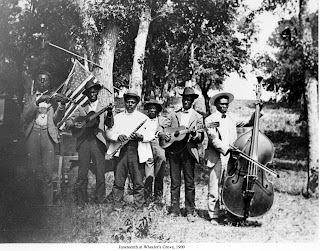
For months, enslaved Blacks in Texas had heard rumors that their freedom was eminent. But it was not until June 19, 1865, two and a half years after the signing of the Emancipation Proclamation, that the official word of their freedom was proclaimed at Galveston with the reading of General Order #3. The following year Emancipation Day celebrations were organized in communities across the state. Eastwoods, Emancipation, and Rosewood Parks are just a few of the popular locations for the celebration during the 19th and 20th centuries here in Austin. In 1909, local folks began to refer to the holiday as “Juneteenth.”

In 1900, Grace Murray Stephenson, a young white woman who lived just a couple of blocks from the celebration grounds, took the oldest known photographs of Juneteenth in the nation. She shot the image below and several others while attending the Juneteenth celebration out at Wheeler’s Grove (today Eastwoods Park) on the campus of The University of Texas at Austin.

[PICA 05476 Austin History Center, Austin Public Library]

For more information, check out these books from the Library:

The Emancipation Proclamation of 1863 and the Emancipation Proclamation, Texas Style (June 19, 1865): a Historical Perspective

Juneteenth, Unique Heritage: an Historical Analysis of the Origin and Evolution of the 19th of June Celebration in Texas

Island of Color: Where Juneteenth Started

Thursday, June 14, 2007

June 16, 1904

Does this date mean anything to you? Need some hints? Stephen Dedalus, a walk through Dublin, “ineluctable modality of the visible,” Leopold Bloom, “potato I have,” Molly Bloom’s soliloquy. Yes, that’s right, June 16 is Bloomsday, the day people all over the world observe Leopold Bloom’s celebrated walk through Dublin as recorded in James Joyce’s Ulysses. In case you can’t recite any passages from memory but would like to do your part and participate in this year’s observance, the library has several different editions of Ulysses that you can check out.

Don’t think you’ll have time to read Ulysses? What about listening to it?
Can’t get to the library? Read this e-book online!
Want to share Bloomsday with friends and family? Choose one of these DVDs:
Want to know more?
Really want to know more? Explore what UT’s HRC has to offer:
It may be too late to join in the celebrations in Dublin this year, but you can see what is happening and plan for next year at www.jamesjoyce.ie. You can also read about walks in Dublin at any time of year: 914.1835 WA - Walking Dublin: 24 Original Walks In and Around Dublin

Closer to home is UT’s 2007 North American James Joyce Conference

If this June 16 caught you unprepared, start now and be ready for next year’s celebration of Bloomsday. For more information about James Joyce and about Bloomsday check our online catalog and our subscription databases.

Wednesday, June 13, 2007

Make the Library Work for You


Here's what you can do to make the Library work better for you.

1. Fill out the Suggestion Form (catalog homepage) for books that you want to read but the Library doesn’t have.
There's no way that we will know every last title that should be on the shelves, especially the non-fiction titles that have no marketing budgets to speak of. Let the acquisitions staff know what you want. You may also suggest audiobooks and dvds. (Very recent titles may be on order, but they do not show up in the catalog. )


2. Borrow by Interlibrary Loan the books that the Library doesn't have.
Our Interlibrary Loan system can borrow books from all over the area or all over the country and then check them out to you if we don’t have the book Assume, by default, that if there's a book that you want to read, your library can get it for you. You may also request audiobooks and dvds.


3. Browse the Library catalog with your kids.
Sit down with the online catalog with your kids and browse from topic to topic and subject to subject and see what else the Library has that they might be interested in.


4. Connect our catalog to LibraryThing.
LibraryThing is an amazing social catalog which lets you keep collections of books (either yours or your favorites from the library), write and read reviews, rate books and link to other people with similar interests.


6. If you find a book on Amazon, check to see if we have it first.
Make it a routine habit to look and see if the Austin Public Library already has the book that you're about to buy - you can save money, get better service, and reduce clutter on your shelves all at once.


7. Put a library reference desk in your cell phone speed dial.
Away from a computer and still need to have a question answered? Just call us at 974-7400 Monday – Friday between 10 and 5.


8. If you don't have time to browse the stacks, place a hold online.
We have a great online reserve system, which lets you place holds on items and pick them up at any location.


9. Read the Library’s blog and make comments.

10. Try a Library resource that you’ve never used.
Databases, book clubs, kids and teens programs, online holds, Good Reads, Catalog FAQs, Telephone Reference, Research Guides, or Chat with a Librarian.

Sunday, June 10, 2007

Traveling Librarian went to Jaume Fuster Library in Barcelona


In May 2007 I spent a couple of days in Barcelona. On the way back down from Güell Park designed by the famed architect Antoni Gaudí, I happened to come across this library going to the Metro. It was around midday and already pretty hot, a good excuse to investigate this modern library.

Barcelona, like many great European cities and towns, is known for its open air cafés. I know of the trend in American libraries to offer coffee shops (to compete with bookstores) but never realized the trend went overseas. This peaked my interest to take a photograph and obviously to go in.

To the right of the doors when entering was the café bar and to the left a nice sized circulation desk.

A little further in from the entrance along a wall were many pamphlets. I helped myself to several of them. The majority of the documents were not in Spanish, but in Catalan. The Catalan word for library is “biblioteque.” Catalan is a Romance language and reflects its proximity to both French and Spanish speaking regions. Most who live in Barcelona are bilingual (Catalan and Spanish).

Right after the professional, colorful pamphlets, I decided to head up the stairs (there were three floors that I explored). I could see a bank of Internet computers, all in use. There was also a substantial, square reference desk area. I decided not to bother the librarian (she seemed engrossed in her work).

When I got back home I did some further research on the Internet. This branch library of the City of Barcelona is over 5,000 square meters or over 54,000 square feet. The architect who designed the building won the FAD award in 2006 for the best new building on the Iberian Peninsula. This impromptu stop on vacation left a lasting impression.

Thursday, June 07, 2007

Readers Beware!


They enter our email inboxes everyday: those helpful messages about the latest safety alerts, missing children, urgent health warnings, amazing photos, and so on. They look innocent and helpful enough, so you hit the forward button to protect your friends and family from the latest threat. We’ve all done it.

Unfortunately, the majority of those forwarded messages are untrue or at least misleading. However, there are several resources available to help you sort through these urban legends and online hoaxes. My favorite is Snopes.com because the authors provide quite a bit of information to back up why the information is true, false, or somewhere in between. Hoaxbusters and Hoaxkill are a few more good sites, and the library has several books available that are informative as well as just plain entertaining:


So, be wary of all that misinformation and check these resources before you forward that next message!

Wednesday, June 06, 2007

Da Vinci Code Copycats


Below is a list of new historical mysteries for fans of Dan Brown’s The Da Vinci Code. If, after reading the list of books, you feel like there’s nothing like the real thing, then you will be glad to hear that Dan Brown is writing a sequel. The Solomon Key is the working title of the unreleased novel that will star Da Vinci Code hero Robert Langdon, and will be based on the Masons.


The Book of Air and Shadows by Michael Gruber
The Book of Fate by Brad Meltzer
Brotherhood of the Holy Shroud by Julia Navarro
The Echelon Vendetta by David Stone
The Fifth Vial by Michael Palmer
The Grave Tattoo by Val McDermid
Labyrinth by Kate Mosse
The Last Templar by Raymond Khoury
The Machiavelli Covenant by Allan Folsom
Mistress of the Art of Death by Ariana Franklin
The Mosaic Crimes by Giulio Leoni
Napolean's Pyramids by William Dietrich
The Secret Supper by Javier Sierra
Templar Legacy by Steve Berry

Monday, June 04, 2007

What are YOU reading this summer?

If you’re like me, you get frustrated deciding what to read from the hundreds and thousands of wonderful books out there. Well, we’ve got something that will help. Turn to our Books & Reader’s Advisory databases! There are several wonderful databases that you can search through for help in deciding what to choose.

Click on Fiction Connection where you can do a specific search by title, author, topics or ISBN. OR you can explore topics, genres, settings, characters, locations and timeframes. When you click any of the exploration areas, you’ll get a huge list. Click on any item within the lists and you’ll get a great, long variety of book titles that fit your specifications. So, if you’re wanting to read that trashy romance novel this summer, click on Genre, then Romance and voila! A long list of romance novels that will meet your, ahem, desires.

You can also click on Good Reads, a collection of lists created by Austin Public Library Librarians. You know they’re good if a Librarian picks them out. There are lists of Notable Books, Lists put together personally by our Librarians, great links to Reader’s Tools and, if you want to read with others, links to local, online and teen book clubs!

This summer can’t be beat if you use our Books & Reader’s Advisory databases in choosing YOUR perfect book. Enjoy!


Friday, June 01, 2007

How about a blog about blogs?

Are you a fanatic of blogs? How many do you read: five, ten, eighteen blogs a day? Well, if you do, you might be very busy going from one blog to another and getting messages on your cell phone telling you that your favorite blogs have updated info!
In case you didn't know, there aretools that are going to make your blog reading experience even more enjoyable.

One of them is Bloglines, my personal favorite. Here you can subscribe to the feeds to all the blogs you like and see them all in one place. You will just need to create an account and voilá! If you read a posting you really like, you can save it into the “Clippings” tab of Bloglines, and you can also create your own blog. Finally, you can track your favorite podcasts and weather channels with Bloglines, plus, you can choose the language interface among 8 different languages. What else can we ask for?

Yahoo! also offers this feature for its subscribers through MyYahoo! Page. The information provided in the Yahoo! feeds comes with images, video, and sound.

Newsgator is also a RSS feeder, like Bloglines but it provides users with a plug in that can be installed in your computer to get the information about the new postings in your favorite blogs through Outlook. If you didn’t know about these tools we invite you to take advantage of them and if you did already, pass this info along to your friends and suggest us other RSS feeds in the comment section of our blog.