According to A Handbook to Literature, alternative history is “a species of fiction—also called allohistory—in which much depends on some major reversal of known geography or history.” I am currently reading Philip Roth’s The Plot Against America, which explores what might have happened if Charles Lindbergh had won the 1940 presidential election against Franklin Roosevelt. Since this is the first alternative history book I’ve read, I wondered what other authors had written about in this genre. The majority of the titles I located delved into different outcomes of World War II or the Civil War. There are, however, quite a few that explore a variety of other topics including the Black Death, the Red Baron, and a 1986 Mars landing. While some alternative history fiction takes a realistic approach to the subject matter, most of these "what if..." stories are classified as a subgenre within science fiction. However, many also cross over into fantasy, horror, and mystery, so there’s something for everyone. Check out our Good Reads section for a list of alternative history fiction or other lists that might pique your interest. For more information about the alternative history genre and a much more extensive list of titles and references, visit Uchronia: The Alternate History List.
Thursday, April 19, 2007
Explore Alternative Histories
According to A Handbook to Literature, alternative history is “a species of fiction—also called allohistory—in which much depends on some major reversal of known geography or history.” I am currently reading Philip Roth’s The Plot Against America, which explores what might have happened if Charles Lindbergh had won the 1940 presidential election against Franklin Roosevelt. Since this is the first alternative history book I’ve read, I wondered what other authors had written about in this genre. The majority of the titles I located delved into different outcomes of World War II or the Civil War. There are, however, quite a few that explore a variety of other topics including the Black Death, the Red Baron, and a 1986 Mars landing. While some alternative history fiction takes a realistic approach to the subject matter, most of these "what if..." stories are classified as a subgenre within science fiction. However, many also cross over into fantasy, horror, and mystery, so there’s something for everyone. Check out our Good Reads section for a list of alternative history fiction or other lists that might pique your interest. For more information about the alternative history genre and a much more extensive list of titles and references, visit Uchronia: The Alternate History List.


Monday, April 16, 2007
Jazz: America's Art Form
 Love to listen to jazz? How about listening to Dr. James Polk, Grammy-nominated musician, discuss jazz? Come on down to the Howson and Carver Branches to see jazz films and learn about various jazz topics for free.
Jazz is an art form invented in early 20th century America. It has evolved into an enduring expression of creativity and innovation. The history of jazz is much more than the history of an extraordinary musical genre — it is also the story of central social, political and cultural issues of the 20th century that continue to play a part in our fledgling 21st.
The next installment of the series will be Monday, April 16th at Carver on the topic of the Swing Era. After you attend a lecture or see a jazz film, come back here and tell us how it went.
For more information and media clips on the Looking at: Jazz Project visit their website, lookingatjazz.org. This project is presented in collaboration of The National Video Resources, American Library Association, and Jazz at Lincoln Center, and funding comes from the National Endowment for the Humanities. Thanks to our partner, the Texas Music Museum.
Friday, April 13, 2007
Farewell to Kurt Vonnegut

They say Kurt Vonnegut died Wednesday, April 11, but maybe he just became unstuck in time. Maybe it’s we who live linearly who have passed through the moment of his death and come out the other side. He could be looping back around to his childhood.
Cool kids in the 70s walked around with Vonnegut paperbacks sticking out the butt pockets of their jeans. I wasn’t a big Vonnegut fan; I’ve read only four of his books. His early science fiction books are too science-fictiony; his later books are too hip.
Thankfully I didn’t start with those. The first one I picked up was Vonnegut’s life-changing Slaughterhouse-Five, one of the great works of anti-war art in any medium. Its protagonist, Billy Pilgrim, travels time, popping into and out of his life, some of it lived on another planet, some of it lived in Dresden on the day in 1945 when the Allies firebombed the city.
Slaughterhouse-Five is a memoir of World War II and a commentary on Vietnam. The book’s message has, unfortunately, been nearly continuously relevant since it was written in 1969. The library owns copies of it and of other Vonnegut books, as well as these classic anti-war volumes:
Cool kids in the 70s walked around with Vonnegut paperbacks sticking out the butt pockets of their jeans. I wasn’t a big Vonnegut fan; I’ve read only four of his books. His early science fiction books are too science-fictiony; his later books are too hip.
Thankfully I didn’t start with those. The first one I picked up was Vonnegut’s life-changing Slaughterhouse-Five, one of the great works of anti-war art in any medium. Its protagonist, Billy Pilgrim, travels time, popping into and out of his life, some of it lived on another planet, some of it lived in Dresden on the day in 1945 when the Allies firebombed the city.
Slaughterhouse-Five is a memoir of World War II and a commentary on Vietnam. The book’s message has, unfortunately, been nearly continuously relevant since it was written in 1969. The library owns copies of it and of other Vonnegut books, as well as these classic anti-war volumes:
All Quiet on the Western Front
Remarque, Erich Maria
Johnny Got His Gun
Trumbo, Dalton
A Bright Shining Lie: John Paul Vann and America in Vietnam
Sheehan, Neil
Catch-22: A Novel
Heller, Joseph
The Red Badge of Courage and Other Stories
Crane, Stephen
Anne Frank: The Diary of a Young Girl
Frank, Anne
A Farewell to Arms
Hemingway, Ernest
Hiroshima
Hersey, John
Slaughterhouse-Five: Or, the Children's Crusade: A Duty-Dance with Death
Vonnegut, Kurt
Remarque, Erich Maria
Johnny Got His Gun
Trumbo, Dalton
A Bright Shining Lie: John Paul Vann and America in Vietnam
Sheehan, Neil
Catch-22: A Novel
Heller, Joseph
The Red Badge of Courage and Other Stories
Crane, Stephen
Anne Frank: The Diary of a Young Girl
Frank, Anne
A Farewell to Arms
Hemingway, Ernest
Hiroshima
Hersey, John
Slaughterhouse-Five: Or, the Children's Crusade: A Duty-Dance with Death
Vonnegut, Kurt
Monday, April 09, 2007
Three Poems to Celebrate National Poetry Month
April is National Poetry Month. The Faulk Central Library is celebrating with a 1st floor poetry book display announced by a large computerized image of Walt Whitman, who said in Leaves of Grass:
Thou reader throbbest life and pride and love the same as I,
Therefore for thee the following chants.
I chose three 2006 collections of poetry from Central’s new book shelves, and found three short poems or “chants” to share with you. Please see the catalog to place a hold on the titles.
The Talking Horse and the Sad Girl and the Village Under the Sea by Mark Haddon 2006 Vintage
Midas
You rarely hear the prologue-
Where ants are marching from the window
to the crib, each one carrying
a grain of wheat to feed the infant king.
the meaning of the story still unwrapped,
the picture fresh as water in a clay jug
or a hot loaf not yet frozen solid
by the king’s greed.
The Republic of Poetry by Martin Espada 2006 W.W. Norton
Advice to a Young Poet
Never pretend
to be a unicorn
by sticking a plunger on your head
The Wanton Sublime by Anna Rabinowitz 2006 Tupelo Press
from THUNDER, SWEET LONGING
Love me loudly or in whispers,
Love me so long, deep night
Is aware of me
And breaks
Into day with a seamless song…
Please visit APL’s Online Database page to find your favorite poem full-text in Litfinder.
Thou reader throbbest life and pride and love the same as I,
Therefore for thee the following chants.
I chose three 2006 collections of poetry from Central’s new book shelves, and found three short poems or “chants” to share with you. Please see the catalog to place a hold on the titles.
The Talking Horse and the Sad Girl and the Village Under the Sea by Mark Haddon 2006 Vintage
Midas
You rarely hear the prologue-
Where ants are marching from the window
to the crib, each one carrying
a grain of wheat to feed the infant king.
the meaning of the story still unwrapped,
the picture fresh as water in a clay jug
or a hot loaf not yet frozen solid
by the king’s greed.
The Republic of Poetry by Martin Espada 2006 W.W. Norton
Advice to a Young Poet
Never pretend
to be a unicorn
by sticking a plunger on your head
The Wanton Sublime by Anna Rabinowitz 2006 Tupelo Press
from THUNDER, SWEET LONGING
Love me loudly or in whispers,
Love me so long, deep night
Is aware of me
And breaks
Into day with a seamless song…
Please visit APL’s Online Database page to find your favorite poem full-text in Litfinder.
Wednesday, April 04, 2007
Miniature books: tiny works of art

How many times have you stopped by a Miniature Books booth in a city fair? Or have seen them by the check out counter of a bookstore? The first thing I think when I see a miniature book is: “How cute!!!” But it wasn’t until “serendipity” put in my hands a little article about the history of these books that make me see them in a different way.
Miniature books were inspired in the very old miniature Japanese wood blocks and Ethiopian scrolls made more than 4000 years ago. During Medieval times, monks would spend months and sometimes years writing and drawing miniature books, which were preferred for portability issues. Right after the invention of the moveable type in 1468 Peter Schoffer printed the first pocket-sized book titled "Diurnale Moguntinum”.
Over the years, miniature books have had an important role in the history of humankind. They had not only been companions of travelers but had also have a significant part in revolutions when people used them as an important tool of their propaganda campaigns.
In the United States a miniature book is not bigger than 3 inches but in the rest of the world, books of up to four inches high are also considered miniature books. So, are you ready to start collecting them?
More info about this topic:
Miniature books were inspired in the very old miniature Japanese wood blocks and Ethiopian scrolls made more than 4000 years ago. During Medieval times, monks would spend months and sometimes years writing and drawing miniature books, which were preferred for portability issues. Right after the invention of the moveable type in 1468 Peter Schoffer printed the first pocket-sized book titled "Diurnale Moguntinum”.
Over the years, miniature books have had an important role in the history of humankind. They had not only been companions of travelers but had also have a significant part in revolutions when people used them as an important tool of their propaganda campaigns.
In the United States a miniature book is not bigger than 3 inches but in the rest of the world, books of up to four inches high are also considered miniature books. So, are you ready to start collecting them?
More info about this topic:
Monday, April 02, 2007
The End of the Road
I hope your thoughts do not normally dwell on how we will survive if there is ever a huge disaster that wipes out the majority of the world’s population, but the well-written, post-apocalyptic novels below will keep your attention. Unlike most post-apocalyptic stories, these novels were not written by science fiction authors.
Brief History of the Dead by Kevin Brockmeier 2006
The City is inhabited by those who have departed Earth but are still remembered by the living. They will reside in this afterlife until they are completely forgotten. But the City is shrinking, and the residents are leaving because of a deadly virus that has struck the inhabitants of Earth.
Children’s Hospital by Chris Adrian 2006
After the earth is flooded below seven miles of water, only a hospital is preserved which is presided over by four angels.
Into the Forest by Jean Hagland 1996
Two sisters, alone in the Northern California forest, face the challenges of survival after a war has brought about the collapse of industrialized America.
Oryx and Crake by Margaret Atwood 2003
An evocative, intriguing tale on the bleak future of the human race that takes the reader back and forth between a post-apocalyptic world and the earlier events that led to the disaster.
The Road by Cormac McCarthy 2006
A father and son try to survive starvation, the elements, and cannibals in a postapocalyptic America
Specimen Days by Michael Cunningham 2005
Brilliantly conceived, empathetic book includes three novellas separated in time: the1890s, the present, and finally 150 years in the future .
Brief History of the Dead by Kevin Brockmeier 2006
The City is inhabited by those who have departed Earth but are still remembered by the living. They will reside in this afterlife until they are completely forgotten. But the City is shrinking, and the residents are leaving because of a deadly virus that has struck the inhabitants of Earth.
Children’s Hospital by Chris Adrian 2006
After the earth is flooded below seven miles of water, only a hospital is preserved which is presided over by four angels.
Into the Forest by Jean Hagland 1996
Two sisters, alone in the Northern California forest, face the challenges of survival after a war has brought about the collapse of industrialized America.
Oryx and Crake by Margaret Atwood 2003
An evocative, intriguing tale on the bleak future of the human race that takes the reader back and forth between a post-apocalyptic world and the earlier events that led to the disaster.
The Road by Cormac McCarthy 2006
A father and son try to survive starvation, the elements, and cannibals in a postapocalyptic America
Specimen Days by Michael Cunningham 2005
Brilliantly conceived, empathetic book includes three novellas separated in time: the1890s, the present, and finally 150 years in the future .
Thursday, March 29, 2007
Mad Magazine
 In the mid-sixties when I was (ahem) younger, the best day of the month was when MAD magazine came in the mail. I’d buy a couple of bags of sunflower seeds, hole up in my room, and spend all afternoon reading every word of MAD, stopping only after I’d carefully tri-folded the back cover (there’s a trick to it). My mother professed to be appalled by my taste in literature, but if my MAD went missing, I’d usually find it on her bedside table.
William Gaines began publishing MAD in 1952, and by the early 60s, all of the artists and writers that made MAD great, Dick DeBartolo, Frank Jacobs, Mort Drucker, Sergio Aragonés, Al Jaffee, Paul Coker Jr., Dave Berg, and Don Martin, were on board. It was a fun place to work because Gaines was a MADman. When MAD’s only subscriber in Haiti failed to renew, Gaines flew the MAD staff there to get him to change his mind. He did.
Gaines died in 1992, and MAD began its creep toward corporatism, finally accepting advertising in 2001. Now it’s a slick, colorful, watered-down version of its formerly black-and-white, independent self. There are still funny bits, but its editors are no longer fearless, and circulation is less than one tenth what it was in 1974, MAD’s heyday.
Still, it was a good run. The library has these books that commemorate it:
Mad Art: A Visual Celebration of the Art of Mad Magazine and the Idiots Who Create It Evanier, Mark
Mad: Cover to Cover: 48 Years, 6 Months & 3 Days of Mad Magazine Covers Jacobs, Frank
Mad: The Half-Wit and Wisdom of Alfred E. Neuman: Classic Pearls of Idiocy
Completely Mad: A History of the Comic Book and Magazine Reidelbach, Maria
MAD About the Sixties: The Best of the Decade
Good Days and Mad: A Hysterical Tour Behind the Scenes at Mad Magazine DeBartolo, Dick.
(Austin Public Library subscribes to MAD magazine and MAD Kids.)
Monday, March 26, 2007
Get Organized!
Spring has arrived, so it’s time once again to do some spring cleaning. If you have a stack of books sitting around your house, consider donating them to the library. We accept donations of best sellers and popular titles for the Library's collection. Hardback books in good condition can be dropped off at any Library location. Paperback books can also be dropped off at any Library location for the Friends of the Austin Public Library Book Sale. Some branch libraries also have magazine give-away tables so you can leave magazines and take a few you haven’t read. Contact your local branch to find out if they offer this service.
Need more help to get organized? We have tons of books about house cleaning and organization. These are just a few of the available titles:
Spring cleaning : the spirit of keeping home
Speed cleaning 101 : cut your cleaning time in half
Cleaning and the meaning of life: simple solutions to declutter your home and beautify your life
Feather your nest: the complete guide to outfitting, cleaning, organizing and caring for your home
Clean like a man: housekeeping for men (and the women who love them)
How clean is your house?
Coming clean: dirty little secrets from a professional housecleaner
Need more help to get organized? We have tons of books about house cleaning and organization. These are just a few of the available titles:
Spring cleaning : the spirit of keeping home
Speed cleaning 101 : cut your cleaning time in half
Cleaning and the meaning of life: simple solutions to declutter your home and beautify your life
Feather your nest: the complete guide to outfitting, cleaning, organizing and caring for your home
Clean like a man: housekeeping for men (and the women who love them)
How clean is your house?
Coming clean: dirty little secrets from a professional housecleaner
Wednesday, March 21, 2007
The Traveling librarian went to the Architects and Engineers Association Library in Costa Rica

I was lucky enough to visit Costa Rica one more time (it's so pretty there that once you go there you want to keep going back!). This time I visited the Architects and Engineers Association Library located in San José. This library is very new; it was formally inaugurated a year ago, but it has been serving patrons since the 1990s. It has a collection of 500 electronic documents and 3000 documents in hardcopy. It mainly compiles laws, technical articles, thesis, and papers.
This library serves approximately 12,000 members and adds 1,000 new members every year. All documents are related to the areas of engineering and architecture. This library is located in a small room in the building with a beautiful view of the North Mountains. The library is run by a single laborious librarian who was the initiator of a digital library for the library's associates which has been very popular and welcome. It's amazing what one person can do!
So if you are planning to buy or build a house in Costa Rica, this is a good place to get information about development laws, and even architectural venues in the country.
This library serves approximately 12,000 members and adds 1,000 new members every year. All documents are related to the areas of engineering and architecture. This library is located in a small room in the building with a beautiful view of the North Mountains. The library is run by a single laborious librarian who was the initiator of a digital library for the library's associates which has been very popular and welcome. It's amazing what one person can do!
So if you are planning to buy or build a house in Costa Rica, this is a good place to get information about development laws, and even architectural venues in the country.
Monday, March 19, 2007
Literary Cookbooks
 Writers often interject descriptions of food or meals partaken in order to move a story along, to add vivid detail, or as a way of depicting character. Writers are often good cooks themselves. Please savor the list of books below that include recipes drawn from your favorite books and authors.
Alice B. Toklas Cook Book
Alice b. Toklas
Between Two Fires: Intimate Writings on Life, Love, Food & Flavor
Laura Esquivel
The Book Club Cookbook: Recipes and Food from Your Book Club's Favorite Books and Authors
Judy Gelman
Book Lover’s Cookbook: Recipes Inspired by Celebrated Works of Literature and the Passages that Feature Them
Shaunda Wenger
A Feast of Words: for Lovers of Food and Fiction
Anna Shapiro
Food to Die For: Secrets from Kay Scarpetta's Kitchen
Patricia Cornwell
Jan Karon’s Mitford Cookbook & Kitchen Reader
Jan Karon
The Jane Austen Cookbook
Maggie Black
Kafka's Soup: a Complete History of World Literature in 14 Recipes
Mark Crick
Read It and Eat: a Month-by-Month Guide to Scintillating Book Club Selections and Mouthwatering Menus
Sarah Gardner
Stirring Prose: Cooking with Texas Authors
Deborah Douglas
Taste of Murder: Diabolically Delicious Recipes from Contemporary Mystery Writers
Jo Grossman
Thursday, March 15, 2007
Digital information, how much is out there?

International Data Group (IDG) did a study to learn the amount of digital information produced by individuals and organizations around the world. According to their report , the amount of digital information produced is equivalent to thousands of tons of books or comparable to 12 towers that cover the distance between planet earth and the sun.
Every day, individuals share more than 100 billion of MP3 files, and YouTube disseminates 100 billion videos every 24 hours. In one year people take more than 100 million pictures with their cell phones and 150 billion pictures with their digital cameras.
The storage unit that has been used is the gigabyte, but because of the large amounts of information produced, very soon we will see a new unit called an exabyte or the equivalent of 100 billion gigabytes. When this storage unit is exhausted, we will use zettabytes that will correspond to 1,000 exabytes.
Many people thought that libraries were going to disappear with the digital information age, but on the contrary, for libraries this influx of resources creates new challenges for finding reliable information quickly and easily, and storing and securing this information. Libraries are going to stay around, but we will have to reinvent ourselves to better serve our patrons.
To read more about this study you can visit the following links:
Monday, March 12, 2007
Music is in the air...
Springtime is here, and we're reminded again why we are lucky to live in this town. I'm speaking, of course, of South by Southwest (SXSW), the annual music festival that brings hundreds of musicians from around the globe to Austin to entertain music industry bigwigs and fans for five days and nights. There's never a shortage of live music in Austin, but from March 14-17 we will be absolutely inundated with new tunes.
Two of my picks are Boris, a loud metal sludge trio from Tokyo, free at Auditorium Shores Saturday the 17th at 5 pm, and later that night at 12:30 am the Stooges, Iggy Pop's legendary band together again, at Stubb's, and probably impossible to get into unless you have a badge.
If you're not able to get in to the Austin show, check out these DVDs and CDs from the library:
Live in Detroit
DVD 782.42166 LI (2004)
Iggy Pop & the Stooges live in Detroit
Raw power
CD MA IGGY 2530 (1997)
Iggy and the Stooges
Lust for life
CD MA POP 3015 (1990)
Iggy Pop
Iggy Pop! Live San Fran 1981
DVD 782.42166 IG (1981)
The big keynote speaker of SXSW this year is Pete Townshend, taking a break from the current Who tour. Not sure where or when Pete might be performing, but you know it'll be even harder to get into than the Stooges show at Stubb's. You might check out these DVDs and CDs instead:
Best of Pete Townshend
CD MA TOWN (1996)
Pete Townshend's Deep End live!
CD MA TOWN (1986)
Who's next
CD MA WHO 2392 (1995)
Who's next
DVD 782.42166 WH (1999)
Tommy and Quadrophenia live: with special guests
DVD 782.1 WH (2005)
And of course APL's own: John Schooley and his One Man Band will be performing Wednesday, March 14, 11:00 p.m. at the Lava Lounge Patio. See him now, before those industry bigwigs find him and whisk him away from us!
Two of my picks are Boris, a loud metal sludge trio from Tokyo, free at Auditorium Shores Saturday the 17th at 5 pm, and later that night at 12:30 am the Stooges, Iggy Pop's legendary band together again, at Stubb's, and probably impossible to get into unless you have a badge.
If you're not able to get in to the Austin show, check out these DVDs and CDs from the library:
Live in Detroit
DVD 782.42166 LI (2004)
Iggy Pop & the Stooges live in Detroit
Raw power
CD MA IGGY 2530 (1997)
Iggy and the Stooges
Lust for life
CD MA POP 3015 (1990)
Iggy Pop
Iggy Pop! Live San Fran 1981
DVD 782.42166 IG (1981)
The big keynote speaker of SXSW this year is Pete Townshend, taking a break from the current Who tour. Not sure where or when Pete might be performing, but you know it'll be even harder to get into than the Stooges show at Stubb's. You might check out these DVDs and CDs instead:
Best of Pete Townshend
CD MA TOWN (1996)
Pete Townshend's Deep End live!
CD MA TOWN (1986)
Who's next
CD MA WHO 2392 (1995)
Who's next
DVD 782.42166 WH (1999)
Tommy and Quadrophenia live: with special guests
DVD 782.1 WH (2005)
And of course APL's own: John Schooley and his One Man Band will be performing Wednesday, March 14, 11:00 p.m. at the Lava Lounge Patio. See him now, before those industry bigwigs find him and whisk him away from us!
Thursday, March 08, 2007
Bestsellers at the Library
If there are no publishing problems, it takes about two to three weeks for a book to become available for check out after it appears on the New York Times Bestseller list. Sometimes we are really lucky and get a new bestseller in a week and a half.
The life-expectancy of a bestselling novel has halved within the last decade, according to a long-term study of fiction bestsellers by Lulu, the world's fastest-growing source of print-on-demand books. The average number of weeks that a new No. 1 bestseller stayed on top of the hardback fiction section of the NYT Bestseller list fell from 14 in the 1970s, to 22 in the 1960s, to 5.5 in the 1990s, to barely two weeks in 2005.
In the 1960s, fewer than three novels reached No. 1 in an average year; and in 2005, 23 novels did. About 57% of the fiction bestsellers that debuted on the 2005 hardcover lists had runs of less than a month. Two fiction bestsellers that stayed on the list for longer than average were The Kite Runner and the The Da Vinci Code. Today I saw 6 copies of The Da Vinci Code on the shelf at Central, so I guess everyone has read that book.
The life-expectancy of a bestselling novel has halved within the last decade, according to a long-term study of fiction bestsellers by Lulu, the world's fastest-growing source of print-on-demand books. The average number of weeks that a new No. 1 bestseller stayed on top of the hardback fiction section of the NYT Bestseller list fell from 14 in the 1970s, to 22 in the 1960s, to 5.5 in the 1990s, to barely two weeks in 2005.
In the 1960s, fewer than three novels reached No. 1 in an average year; and in 2005, 23 novels did. About 57% of the fiction bestsellers that debuted on the 2005 hardcover lists had runs of less than a month. Two fiction bestsellers that stayed on the list for longer than average were The Kite Runner and the The Da Vinci Code. Today I saw 6 copies of The Da Vinci Code on the shelf at Central, so I guess everyone has read that book.
Monday, March 05, 2007
Chat with a Librarian

Ever click “Chat with a Librarian”, seen this message pop up -- Welcome to Austin Public Library's Chat with a Librarian. A librarian will be with you momentarily.-- and wondered what’s happening on our end? Here’s how it works:
So you’ve carefully considered your question, spent time making it as clear and concise as possible, and now your cursor hovers over Login to Live Chat. When you click, we librarians in Telephone Reference hear our computers sing “TA DA!”, and that’s how we know you’re there. One of us sets aside what she’s doing as fast as she can (while your computer vamps with that Welcome… message), opens the chat window, accepts your request and we’re off!
Some questions are asked so frequently that we’ve developed FAQ scripts to cut and paste into the chat window; for example, we have scripted directions for how to put a book on hold. Others are unique and complicated and we might ask for contact information from you so we can do more research and e-mail you back. Mostly we try to answer your question while you’re logged in to chat
Give our chat a try, if you haven’t already, and spread the word!
So you’ve carefully considered your question, spent time making it as clear and concise as possible, and now your cursor hovers over Login to Live Chat. When you click, we librarians in Telephone Reference hear our computers sing “TA DA!”, and that’s how we know you’re there. One of us sets aside what she’s doing as fast as she can (while your computer vamps with that Welcome… message), opens the chat window, accepts your request and we’re off!
Some questions are asked so frequently that we’ve developed FAQ scripts to cut and paste into the chat window; for example, we have scripted directions for how to put a book on hold. Others are unique and complicated and we might ask for contact information from you so we can do more research and e-mail you back. Mostly we try to answer your question while you’re logged in to chat
Give our chat a try, if you haven’t already, and spread the word!
Wednesday, February 28, 2007
An Author's Introduction

If you come to the Austin History Center, Tuesday, March 6 at 7 pm, you will hear the introduction printed below for Nate Blakeslee, the author of Tulia, Race, Cocaine, and Corruption in a Small Texas Town.
“Welcome to the Austin Public Library’s Meet the Author series. Tonight we’re talking about race, justice, and the war on drugs, with one of the most admired and effective investigative reporters working, Nate Blakeslee.
Mr. Blakeslee is a muckraker, and lord knows these days there is muck to rake. He’s written on Enron and Halliburton and radioactive waste, but it’s his reporting in The Texas Observer on drug busts in the panhandle town of Tulia, Texas, that has brought Nate awards and accolades--and a contract for a big-time Hollywood movie!
But as spectacular as that is, I suspect Nate is most proud that his work led to the freeing of innocent people, to accountability, and to changes in the law.
The book is Tulia: Race, Cocaine, and Corruption in a Small Texas Town, and it’s a page-turner. Ladies and gentlemen, Nate Blakeslee.”
Mr. Blakeslee frequently called the Library’s Telephone Reference service (974-7400) to confirm facts and dates while doing the research for his book.
“Welcome to the Austin Public Library’s Meet the Author series. Tonight we’re talking about race, justice, and the war on drugs, with one of the most admired and effective investigative reporters working, Nate Blakeslee.
Mr. Blakeslee is a muckraker, and lord knows these days there is muck to rake. He’s written on Enron and Halliburton and radioactive waste, but it’s his reporting in The Texas Observer on drug busts in the panhandle town of Tulia, Texas, that has brought Nate awards and accolades--and a contract for a big-time Hollywood movie!
But as spectacular as that is, I suspect Nate is most proud that his work led to the freeing of innocent people, to accountability, and to changes in the law.
The book is Tulia: Race, Cocaine, and Corruption in a Small Texas Town, and it’s a page-turner. Ladies and gentlemen, Nate Blakeslee.”
Mr. Blakeslee frequently called the Library’s Telephone Reference service (974-7400) to confirm facts and dates while doing the research for his book.
Monday, February 26, 2007
Libraries and War: Stories of Hope

It is known that the first targeted buildings in times of war are libraries. That is how millions of rare and valuable collections have disappeared, and with them, parts of the history of humanity. One can find information on the destruction of libraries and archives such as the Oriental Library in Shangai in 1934, the Naples State Archives in Germany in 1943, and the National and University Library in Bosnia-Herzegovina in 1992. These stories impact us not only as librarians, but as people who value library collections, rare literary gems, and reading.
In the last two years, however, there have been two interesting stories in the news about librarians preserving their collections during armed conflicts. The first story is about Alia Muhammad Baker, a librarian in Basra, Iraq. This librarian knew she had a very special library collection, and when the war started in 2003, she decided to move, during the night, all the books to her house and friends’ homes to protect them. The second story is about Hirsie Mohamed Hirui, a librarian from Somalia who keeps his library open even though the majority of the buildings in the city have been closed due to the high level of violence. “When people read, they are not worried about anything”, Hirui says. These are two wonderful stories about strong people who are trying to make a difference in the middle of chaos.
Austin Public Library owns the children's book Librarian of Basra: a true story from Iraq
To know more about the Somali library we recommend the following link:
Chaos Can’t Shut Somali Library
In the last two years, however, there have been two interesting stories in the news about librarians preserving their collections during armed conflicts. The first story is about Alia Muhammad Baker, a librarian in Basra, Iraq. This librarian knew she had a very special library collection, and when the war started in 2003, she decided to move, during the night, all the books to her house and friends’ homes to protect them. The second story is about Hirsie Mohamed Hirui, a librarian from Somalia who keeps his library open even though the majority of the buildings in the city have been closed due to the high level of violence. “When people read, they are not worried about anything”, Hirui says. These are two wonderful stories about strong people who are trying to make a difference in the middle of chaos.
Austin Public Library owns the children's book Librarian of Basra: a true story from Iraq
To know more about the Somali library we recommend the following link:
Chaos Can’t Shut Somali Library
Thursday, February 22, 2007
A grim fairy tale

Pan’s Labyrinth is making waves around the world and is a contender for six Oscars including Best Foreign Language Film of the Year and Original Screenplay. In the movie, a young girl copes with her harsh stepfather and the horrors of the Spanish Civil War by escaping to a fantastic world filled with fauns, fairies, and ogres. Melding the realism of war with a fairy tale creates a truly dark and disturbing film. The Pan’s Labyrinth web site states that writer and director Guillermo Del Toro “is well versed in mythology and the history and forms of fairy tales, as described by authors including Maria Tatar, Jack Zipes, Vladimir Propp, and Bruno Bettelheim.” Del Toro states, “There is something vaguely embryonic about all the magic environments because I believe that fairy tales are ultimately about two things: facing the dragon or climbing back to our world inside.” Check out one of our many books about the influence of fairy tales:
God of the fairy tale: finding truth in the land of make-believe. Jim Ware 398.2 WA
Spinning straw into gold: what fairy tales reveal about the transformations in a woman's life. Joan Gould 398.352082 GO
The Brothers Grimm: from enchanted forests to the modern world. Jack David Zipes 398.20922 ZI
The witch must die: how fairy tales shape our lives. Sheldon Cashdan 398.45 CA
Off with their heads!: fairytales and the culture of childhood. Maria M. Tatar 398.45 TA
The uses of enchantment: the meaning and importance of fairy tales. Bruno Bettelheim 398.2 BE
Amazing Grace, the Film

The new inspirational film Amazing Grace is about the long battle to abolish slavery in England. William Wilberforce, a British parliamentarian, repeatedly introduced bills against the slave trade, and for 20 years, Parliament voted down all but the mildest reforms. Finally, in 1807, Parliament abolished the slave trade by an overwhelming vote. In 1833, as Wilberforce lay dying, slavery was abolished throughout the empire--46 years after the battle was begun.
The movie gets its name from Wilberforce's friendship with John Newton, the author of the hymn "Amazing Grace" and a former slave trader who helped Wilberforce to abolish the trade.
If you would like to read more about slavery in England, please check out the books listed below.
You can also find many recordings of the hymn in the Library’s collection.
Bury the Chains: Prophets and Rebels in the Fight to Free an Empire’s Slaves
Adam Hochschild (2005)
Hero for Humanity: a Biography of William Wilberforce
Kevin Belmonte (2002)
The Queen’s Slave Traders: John Hawkins, Elizabeth I, and the Trafficking in Human Souls
Nick Hazlewood (2004)
Rough Crossings: Britain, the Slaves, and the American Revolution
Simon Schama (2006)
The Two Princes of Calabar: an Eighteenth-Century Atlantic Odyssey
Randy Sparks (2004)
Though the Heavens May Fall: the Landmark Trial that Led to the End of Human Slavery
The movie gets its name from Wilberforce's friendship with John Newton, the author of the hymn "Amazing Grace" and a former slave trader who helped Wilberforce to abolish the trade.
If you would like to read more about slavery in England, please check out the books listed below.
You can also find many recordings of the hymn in the Library’s collection.
Bury the Chains: Prophets and Rebels in the Fight to Free an Empire’s Slaves
Adam Hochschild (2005)
Hero for Humanity: a Biography of William Wilberforce
Kevin Belmonte (2002)
The Queen’s Slave Traders: John Hawkins, Elizabeth I, and the Trafficking in Human Souls
Nick Hazlewood (2004)
Rough Crossings: Britain, the Slaves, and the American Revolution
Simon Schama (2006)
The Two Princes of Calabar: an Eighteenth-Century Atlantic Odyssey
Randy Sparks (2004)
Though the Heavens May Fall: the Landmark Trial that Led to the End of Human Slavery
Steven Wise (2005)
Saturday, February 17, 2007
Must-Hear 2006 Audiobooks
Sometimes an audiobook can be a better literary experience than a printed book. The narration by a professional actor can make the story come alive and stay with you longer. Browsing at your local branch may not result in an audiobook that you will like. Quite often you will need to place a hold on a popular title using the online catalog.
Below is a list of some must-hears from 2006. For more suggestions, please see Good Reads.
Fiction
Between Georgia by Joshilyn Jackson
Gentleman and Players by Joanne Harris
Memory Keeper’s Daughter by Kim Edwards
The Road by Cormac McCarthy
The Sea by John Banville
A Spot of Bother by Mark Haddon
The Thirteenth Tale by Diane Setterfield
Water for Elephants by Sara Gruen
Historical Fiction
Imperium by Robert Harris
Ordinary Heroes by Scott Turow
The Rising Tide by Jeff Shaara
Suite Francaise by Irene Nemirovsky
Telegraph Days by Larry Mc Murtry
Thirteen Moons by Charles Frazier
Mysteries and Thrillers
The Afghan by Frederick Forsythe
The Book of Fate by Brad Meltzer
Dirty Blonde by Lisa Scottelone
Errors and Omissions by Paul Goldstein
Fortunate Son by Walter Mosley
The Husband by Dean Koontz
Killer Instinct by Joseph Finder
Kingdom Come by Tim Green
The Prisoner of Guantanamo by Dan Fesperman
Twelve Sharp by Janet Evanovich
Below is a list of some must-hears from 2006. For more suggestions, please see Good Reads.
Fiction
Between Georgia by Joshilyn Jackson
Gentleman and Players by Joanne Harris
Memory Keeper’s Daughter by Kim Edwards
The Road by Cormac McCarthy
The Sea by John Banville
A Spot of Bother by Mark Haddon
The Thirteenth Tale by Diane Setterfield
Water for Elephants by Sara Gruen
Historical Fiction
Imperium by Robert Harris
Ordinary Heroes by Scott Turow
The Rising Tide by Jeff Shaara
Suite Francaise by Irene Nemirovsky
Telegraph Days by Larry Mc Murtry
Thirteen Moons by Charles Frazier
Mysteries and Thrillers
The Afghan by Frederick Forsythe
The Book of Fate by Brad Meltzer
Dirty Blonde by Lisa Scottelone
Errors and Omissions by Paul Goldstein
Fortunate Son by Walter Mosley
The Husband by Dean Koontz
Killer Instinct by Joseph Finder
Kingdom Come by Tim Green
The Prisoner of Guantanamo by Dan Fesperman
Twelve Sharp by Janet Evanovich
Wednesday, February 14, 2007
Arthur Ashe's Virtual Museum
 Arthur Ashe’s widow, Jeanne Moutoussamy-Ashe, has created an interactive web site to commemorate her husband’s spirit and legacy. Arthur Ashe, who died 14 years ago, speaks to us in video interviews about tennis, education, protest, and AIDS.
 The web site takes a minute to load, and this time the introduction is worth watching.
Books at the Austin Public Library by Arthur Ashe
Advantage Ashe
Arthur Ashe on Tennis
Days of Grace: a Memoir
A Hard Road to Glory: a History of the African-American Athlete
Off the court
Books at the Austin Public Library about Arthur Ashe
Daddy and Me: a Photo Story of Arthur Ashe and his Daughter, Camera
I Remember Arthur Ashe: Memories of a True Tennis Pioneer and Champion of Social Causes by the People Who Knew Him
Monday, February 12, 2007
What’s More Romantic Than a Poem?

There are many gifts you can give your significant other this Valentine's Day: chocolate, flowers, cards, but how about a poem?
Here is one by the Chilean poet Pablo Neruda:
Here is one by the Chilean poet Pablo Neruda:
Love Sonnet XLV
by Pablo Neruda
Don't go far off, not even for a day, because--
because--
I don't know how to say it: a day is long
and I will be waiting for you, as in an empty station
when the trains are parked off somewhere else, asleep.
Don't leave me, even for an hour,
because
then the little drops of anguish will all run
together,
the smoke that roams looking for a home will drift
into me, choking my lost heart.
Oh, may your silhouette never dissolve on the beach;
may your eyelids never flutter into the empty
distance.
Don't leave me for a second, my dearest,
because in that moment you'll have
gone so far
I'll wander mazily over all the earth, asking,
Will you come back? Will you leave me here, dying?
The poem was taken from the book 100 Love Sonnets, a bilingual edition you can find at the Faulk Central Library. We also have two book displays on the subject of love. Both displays include a Valentine’s Day Raffle where you can win a box of chocolates. Wednesday is the last day to enter. Happy Valentine's Day!
Friday, February 09, 2007
From Slavery to Freedom

February is Black History Month. This year’s theme is “From Slavery to Freedom” which honors the historical importance of slavery and the struggle for freedom in the making of modern societies in the Americas. Some of the finest writers in the African American literary tradition have rewritten the slave experience in a contemporary novel. Below is a list of books in chronological order that you can find at the Library. Please check the catalog for availibility.
Ernest Gaines, The Autobiography of Miss Jane Pittman (1971)
Gayl Jones, Corregidora (1975)
Alex Haley, Roots (1976)
David Bradley, The Chaneyvsville Incident (1981)
John Edgar Wideman, Damballah (1981)
Charles Johnson, Oxherding Tale (1982)
Shirely Anne Williams, Dessa Rose (1986)
Toni Morrison, Beloved (1987)
Barbara Chase-Riboud, Echo of Lions (1989)
Octavia Butler, Kindred (1998)
Charles Johnson, Middle Passage (1990)
J. California Cooper, Family (1991)
Caryl Phillips, Crossing the River (1993)
Louise Merriweather, Fragments of the Ark (1994)
Fred D’Aguiar, The Longest Memory (1994)
Phyllis Perry, Stigmata (1998)
Alice Randall, The Wind Done Gone (2001)
Lalita Tademy, Cane River (2001)
Edward P. Jones, The Known World (2004)
Nancy Rawles, My Jim (2005)
Gayl Jones, Corregidora (1975)
Alex Haley, Roots (1976)
David Bradley, The Chaneyvsville Incident (1981)
John Edgar Wideman, Damballah (1981)
Charles Johnson, Oxherding Tale (1982)
Shirely Anne Williams, Dessa Rose (1986)
Toni Morrison, Beloved (1987)
Barbara Chase-Riboud, Echo of Lions (1989)
Octavia Butler, Kindred (1998)
Charles Johnson, Middle Passage (1990)
J. California Cooper, Family (1991)
Caryl Phillips, Crossing the River (1993)
Louise Merriweather, Fragments of the Ark (1994)
Fred D’Aguiar, The Longest Memory (1994)
Phyllis Perry, Stigmata (1998)
Alice Randall, The Wind Done Gone (2001)
Lalita Tademy, Cane River (2001)
Edward P. Jones, The Known World (2004)
Nancy Rawles, My Jim (2005)
Wednesday, February 07, 2007
Molly Ivins 1944-2007
 Austin resident and political humorist Molly Ivins died January 31, 2007. Molly was a frequent library user; we’ll miss seeing her here. We can’t improve on the Texas Observer’s comprehensive review of the life and writings of their former co-editor, so we’ll just link to it: http://www.texasobserver.org/
Here’s a list of just a few of Molly’s books you can check out from Austin Public Library:
Who Let the Dogs In?: Incredible Political Animals I Have Known
Bushwhacked: Life in George W. Bush's America
You Got to Dance with Them What Brung You
Shrub : The Short but Happy Political Life of George W. Bush
Monday, February 05, 2007
Coffee Today and in the 27th Century
 The Austin Public Library will host the authors of The Birth of Coffee, Wednesday, February 21 at 7 pm at the Austin History Center, 810 Guadalupe. Daniel and Linda Rice Lorenzetti will present an evening of photographs and narrative from their travels to the coffee-producing countries of Indonesia, Ethiopia, Kenya, Yemen, Colombia, Costa Rica, Guatemala, and Brazil.
 According to an online National Geographic article "coffee as we know it kicked off in Arabia, where roasted beans were first brewed around A.D. 1000."
In Charles Stross' new science fiction novel, Glasshouse, which takes place in the 27th century, humans are still drinking coffee.
A dark-skinned human with four arms walks toward me across the floor of the club, clad only in a belt strung with human skulls ...She pulls out the chair and sits, flipping her great mass of dark hair over her shoulder and tucking her skulls under the table with two hands as she glances at the menu. "Hmm, I think I will have an iced double mocha pickup, easy on the coca."
Thursday, February 01, 2007
Farewell to Sidney Sheldon
Novelist, screenwriter, and playwright Sidney Sheldon died Tuesday afternoon at the age of 89 from complications from pneumonia. Over the course of his long career, Sheldon wrote 200 television scripts, twenty-five major motion pictures, six Broadway plays, and eighteen novels. Sheldon began his career at the age of 17 as a reader at Universal Studios and then joined the Air Force during World War II. After the war, he traveled to New York and wrote the Broadway musicals Merry Widow, Jackpot, and Dream with Music before winning an Academy Award in 1948 for his screenplay for The Bachelor and the Bobby-Soxer. Sheldon also wrote scripts for The Patty Duke Show, I Dream of Jeannie, and Hart to Hart.
Sheldon’s career as a novelist began in 1970 with the mystery novel, The Naked Face, which won the Edgar Allan Poe Award for the best first mystery novel of the year. Although not universally lauded by critics, Sheldon has always entertained his readers. In an interview with Paul Rosenfield of the Los Angeles Times, Sheldon states, “"I have this goal. And it's for a reader to not be able to go to sleep at night. I want him to keep reading another four pages, then one more page. The following morning, or night, he's anxious to get back to the book." His books have been published in 180 countries and translated into fifty-one languages. His memoir The Other Side of Me was published in 2005. Please visit the online catalog to check the availability of all Sheldon’s titles or to place a hold.
Sheldon’s career as a novelist began in 1970 with the mystery novel, The Naked Face, which won the Edgar Allan Poe Award for the best first mystery novel of the year. Although not universally lauded by critics, Sheldon has always entertained his readers. In an interview with Paul Rosenfield of the Los Angeles Times, Sheldon states, “"I have this goal. And it's for a reader to not be able to go to sleep at night. I want him to keep reading another four pages, then one more page. The following morning, or night, he's anxious to get back to the book." His books have been published in 180 countries and translated into fifty-one languages. His memoir The Other Side of Me was published in 2005. Please visit the online catalog to check the availability of all Sheldon’s titles or to place a hold.
Wednesday, January 31, 2007
Moving to Paris

I was surprised to find so many books in the Library's collection about expatriates living in France, and how often the books circulated. Usually the lucky person who moves to France, to shop daily for fresh produce in the Parisian markets, or to fix up a crumbling country house, has married a French citizen or has a lot of extra money. For the rest of us, we have to be satisfied with just reading about their experiences. C'est la vie!
Some recent titles are:
Almost French: Love and a New Life in Paris by Sarah Turnbull
Chasing Matisse: a Year in France Living My Dream by James Morgan
Extremely Pale Rose: a Very French Adventure by Jamie Ivey
French Spirits: a House, a villa, and a Love Affair in Burgundy by Jeffrey Greene
Me Talk Pretty One Day by David Sedaris
We'll Always Have Paris: Sex and Love in the City of Light by John Baxter
Words in a French Life: Lessons in Love and Language from the South of France by Kristin Espinasse
A Year in Provence by Peter Mayle
Please check the catalog for availability or to place a hold.
Saturday, January 27, 2007
Traveling librarian Visits Burton Barr Central Library
 What a great experience!! I had the opportunity to be in Phoenix yesterday and visited the wonderful Burton Barr Central Library. This library was built in 1995, and has an area of 280,000 square feet. The building's five stories are constructed of concrete, glass, and iron. I know you might be thinking that it is too gray, but on the contrary, there is lots of light and color in this library. Bright green desks for computers, and art exhibits and neon signs give a vibrant look to this library.
The children’s area has a little garden where librarians offer story times and parents read to their kids among beautiful plants in a lovely setting. A popular area in the library is Teen Central, a room with music, lots of computers, and vending machines. This is the only place in the library where you are allowed to eat - if you are a teenager, of course.
Lots of people visit this library on the Summer Solstice, June 21. They ascend to the fifth floor where people say they can see a flame illusion on the special columns and the shadows move unusually quickly on the walls and skylights. So, if you want to do something special for this summer, why not go to the Burton Barr Central Library and experience something new! We will love to hear your comments!
Wednesday, January 24, 2007
Oh, Oscar!
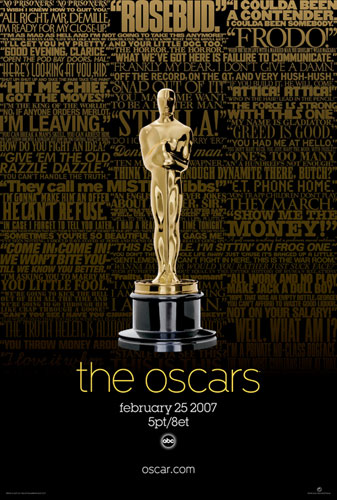 This week the Oscar nominations were announced. Did you know that the following nominated films started out as books?
Letters from Iwo Jima, book titled Picture Letters from Commander in Chief by Tadamichi Kuribayashi
Children of Men, book of the same title by P.D. James
Little Children, book of the same title by Tom Perrotta
Notes on a Scandal, book of the same title by Zoe Heller
What’s your favorite book-turned-Oscar-winning movie? Check our catalog to read the books before you head out to see the movie. Then watch the Oscars to see who won!
Friday, January 19, 2007
Say Goodbye to Art Buchwald
Prolific humor writer, Pulitzer-prize winning columnist, and political gadfly, Art Buchwald died Wednesday of kidney failure. For nearly six decades Buchwald wrote satire columns that appeared in more than 500 newspapers all across the country.
Buchwald's father went broke in the Depression and his mother was institutionalized shortly after his birth in 1925. He and his sisters were shuttled between foster homes and the Hebrew Orphan Asylum. He battled bouts of depression most of his life, which he openly wrote about, hoping to help others. He said in a 1994 interview with National Public Radio that "I did discover early in life I could make people laugh. That's what's changed my life, because as long as I could make 'em laugh, I could get a lot of love."
In February 2006, Buchwald decided to forego dialysis and was given 3 weeks to live. He checked into a hospice, planned his funeral, and faced death without flinching, but then, to everyone's surprise, lived for another eleven months He wrote in his newly resumed column that he had to "scrap his funeral plans, rewrite his living will, buy a new cell phone, and get on with his improbable life." His most recent book, Too Soon to Say Goodbye, is about this unexpected last year. The Library has ordered the book, and should be getting copies soon. In the meantime, you can read earlier works such as Leaving Home, a bright, funny and poignant memoir of his early years, or I'll Always Have Paris, which describes Buchwald's Paris years as a member of the Herald Tribune staff during the 1940s and 1950s, hobnobbing with the rich, the famous, and the literary.
Buchwald's father went broke in the Depression and his mother was institutionalized shortly after his birth in 1925. He and his sisters were shuttled between foster homes and the Hebrew Orphan Asylum. He battled bouts of depression most of his life, which he openly wrote about, hoping to help others. He said in a 1994 interview with National Public Radio that "I did discover early in life I could make people laugh. That's what's changed my life, because as long as I could make 'em laugh, I could get a lot of love."
In February 2006, Buchwald decided to forego dialysis and was given 3 weeks to live. He checked into a hospice, planned his funeral, and faced death without flinching, but then, to everyone's surprise, lived for another eleven months He wrote in his newly resumed column that he had to "scrap his funeral plans, rewrite his living will, buy a new cell phone, and get on with his improbable life." His most recent book, Too Soon to Say Goodbye, is about this unexpected last year. The Library has ordered the book, and should be getting copies soon. In the meantime, you can read earlier works such as Leaving Home, a bright, funny and poignant memoir of his early years, or I'll Always Have Paris, which describes Buchwald's Paris years as a member of the Herald Tribune staff during the 1940s and 1950s, hobnobbing with the rich, the famous, and the literary.
Thursday, January 11, 2007
Tax Time
Start your year off right by getting a jump start on your taxes! Stop by the Faulk Central Library to find all sorts of tax forms for your filing needs. Some Austin Public Library branches have the basic forms available as well as tax assistance. See our web site for a list of locations or Ask a Librarian for more information. You can also download tax forms directly from the IRS Website.
Beginning January 16th - April 16th, Foundation Communities will once again provide tax preparation services through its Community Tax Centers program. Families that make $50,000 a year or less or individuals who make $25,000 a year or less are eligible. The centers offer free paper and electronic tax filing, bilingual and sign-language interpreters, prior-year tax return preparation, and applications for Individual Taxpayer Identification Numbers. Please see the Community Tax Centers web site for information about what forms they will prepare, what to bring, locations, and hours of operation.
Beginning January 16th - April 16th, Foundation Communities will once again provide tax preparation services through its Community Tax Centers program. Families that make $50,000 a year or less or individuals who make $25,000 a year or less are eligible. The centers offer free paper and electronic tax filing, bilingual and sign-language interpreters, prior-year tax return preparation, and applications for Individual Taxpayer Identification Numbers. Please see the Community Tax Centers web site for information about what forms they will prepare, what to bring, locations, and hours of operation.
Tuesday, January 09, 2007
Books into Film
The movie Children of Men, starring Clive Owen and Julianne Moore, recently opened to glowing reviews. The movie was based on a book with the same title written by the British mystery writer, P.D. James. Many other 2006 movies were based on books that are worth reading even if you have seen the movie. Books made into film this past year are: American Knees (Amercanese), Aquamarine, Ask the Dust, Black Dahlia, Death and Life of Bobby Z, The Devil Wears Prada, Eragon, Freedomland, The Good German, Killshot, Little Children, The Namesake, The Night Listener, Perfume: the Story of a Murderer, The Pursuit of Happyness, Running with Scissors, Snow Angels, Tenants, The Thief Lord, The Treatment, The Visitation, and Wedding Season. Please check the Library's catalog for availability or to place a hold.
Friday, January 05, 2007
Old news!?!?

Post Och Inrikes Tidningar is a Swedish newspaper that has been published non-stop since 1645. This is one of the oldest newspapers that is still in circulation in the world. Interesting ah? But how much do we know about the history of the newspapers?
Well, the first newspaper recorded in history is Acta Diurna, a Roman newspaper “published” around 59 B.C. In this periodical, Julius Caesar informed the public about the latest news and events coming up. It also had information on scandals, trials, and executions. In China, the government during the Han dynasty (202 B.C. – 221 A.D) also printed news-sheets that they called “tipao.” These were reproduced by wooden carvings and had official announcements and news for the Chinese bureaucrats and officials.
According to the World Association of Newspapers, the oldest newspaper that is still published in the United States is the Hartford Courant. This newspaper started to be published in 1764 in Connecticut. Other old newspapers in this country are Northampton Daily Hampshire Gazette (1786), the Berkshire Eagle (1789), and the Norwich Bulleting (1791), all of them from the East Coast.
For more information on the history of the newspapers visit the following links:
World Association of Newspapers. Newspapers a brief history.
http://www.wan-press.org/article2821.html?var_recherche=oldest+newspaper
Hartford Courant information in Wikipedia
http://en.wikipedia.org/wiki/The_Hartford_Courant
Tuesday, January 02, 2007
Resolutions and Black-Eyed Peas
Ever wonder why we are so hard pressed to make a new year's resolution? What are some of the top resolutions? And why do so many people tell me to eat black-eyed peas on January first?
First of all, a resolution is a committment or decision to do something or behave in a certain manner. Accordingly, popular resolutions include: losing weight/becoming more healthy, quit smoking/quiting a bad habit, and becoming financially sound/getting out of debt. After hunting around on the Internet, I found that the tradition of celebrating the new year dates back to the time of the Babylonians, about 4,000 years ago! The early Babylonian's themselves often resolved to return borrowed items. The early Christians believed that we should reflect on past mistakes and resolve to make the new year better.
So, thousands of years of tradition and custom is carried on when we make a resolution. What's your resolution? I resolve to do something I've never done before every week! We'll see how long that lasts.
Did you eat your black-eyed peas yesterday? I did. I also had them for leftovers today. The tradition of eating black-eyed peas on January 1st is a Southern tradition. The reason for eating these legumes is that it is said to bring good luck and prosperity to whomever eats them. In Texas, cabbage is also traditionally eaten on the first day of the year as it is a symbol of money. So, if you ate your black-eyed peas and cabbage, you should be good to go for the rest of the year.
First of all, a resolution is a committment or decision to do something or behave in a certain manner. Accordingly, popular resolutions include: losing weight/becoming more healthy, quit smoking/quiting a bad habit, and becoming financially sound/getting out of debt. After hunting around on the Internet, I found that the tradition of celebrating the new year dates back to the time of the Babylonians, about 4,000 years ago! The early Babylonian's themselves often resolved to return borrowed items. The early Christians believed that we should reflect on past mistakes and resolve to make the new year better.
So, thousands of years of tradition and custom is carried on when we make a resolution. What's your resolution? I resolve to do something I've never done before every week! We'll see how long that lasts.
Did you eat your black-eyed peas yesterday? I did. I also had them for leftovers today. The tradition of eating black-eyed peas on January 1st is a Southern tradition. The reason for eating these legumes is that it is said to bring good luck and prosperity to whomever eats them. In Texas, cabbage is also traditionally eaten on the first day of the year as it is a symbol of money. So, if you ate your black-eyed peas and cabbage, you should be good to go for the rest of the year.
Friday, December 29, 2006
Celebrate the New Year!
It’s almost New Year’s Eve, so get your noisemakers and streamers ready! If you are heading to the First Night Austin celebration, keep an eye out for your friendly neighborhood librarians and a few of your favorite book characters in the parade! The schedule for First Night includes a variety of art, music, dance, film, spoken word, and fireworks.
Then, as the clock strikes midnight, many people will hear the traditional Scottish ballad "Auld Lang Syne" written by the poet Robert Burns. Here are the first two stanzas of the poem according to the Litfinder database:
Happy New Year! And remember that the library will be closed on Monday for New Years Day.
Then, as the clock strikes midnight, many people will hear the traditional Scottish ballad "Auld Lang Syne" written by the poet Robert Burns. Here are the first two stanzas of the poem according to the Litfinder database:
Should auld acquaintance be forgot,
And never brought to min'?
Should auld acquaintance be forgot,
And auld lang syne?
For auld lang syne, my dear.
For auld lang syne,
We'll tak a cup o' kindness yet,
For auld lang syne.

Happy New Year! And remember that the library will be closed on Monday for New Years Day.
Saturday, December 23, 2006
Leftover Turkey Recipe
The Library will be closed Sunday, Monday, and Tuesday. Here is recipe to try Tuesday with your turkey leftvovers. The recipe for Turkey White Bean Soup is from the January 2005 Good Housekeeping. You can find more recipes in cooking magazines using the Libary's Masterfile database.
Prep 15 minutes · Cook about 25 minutes
Makes about 8 cups or 4 main-dish servings2 tablespoons olive oil
2 large garlic cloves, crushed with press
½ teaspoon salt
¼ teaspoon crushed red pepper
Pinch dried rosemary, crumbled
2 cans (15 to 19 ounces each) white beans, rinsed
and drained (use small white beans, cannellini,
chickpeas, navy beans, or any combination)
1 can (28 ounces) plum tomatoes in juice
1 can (14 to 14 1/2 ounces) chicken broth (1 3/4 cups)
1 bag (6 ounces) baby spinach, arugula, and
shredded carrot blend or 1 bag (5 to 6 ounces)
baby spinach
1 1/2 cups (½-inch pieces) leftover roast turkey meat
(8 ounces)
Freshly grated Parmesan cheese
1. In 5-quart saucepot, heat oil over medium-low heat. Add garlic, salt, crushed red pepper, and rosemary, and cook until garlic begins to turn golden brown, about 1 minute, stirring constantly. Stir in beans, tomatoes with their juice, and broth; heat to boiling over high heat, breaking up tomatoes with side of spoon. Reduce heat to low; cover and simmer 20 minutes.
2.Stir in spinach blend and turkey; heat to boiling over high heat. Reduce heat to low; cover and simmer 5 minutes or until spinach wilts and turkey is heated through. Serve in soup bowls and sprinkle with Parmesan cheese.
Prep 15 minutes · Cook about 25 minutes
Makes about 8 cups or 4 main-dish servings2 tablespoons olive oil
2 large garlic cloves, crushed with press
½ teaspoon salt
¼ teaspoon crushed red pepper
Pinch dried rosemary, crumbled
2 cans (15 to 19 ounces each) white beans, rinsed
and drained (use small white beans, cannellini,
chickpeas, navy beans, or any combination)
1 can (28 ounces) plum tomatoes in juice
1 can (14 to 14 1/2 ounces) chicken broth (1 3/4 cups)
1 bag (6 ounces) baby spinach, arugula, and
shredded carrot blend or 1 bag (5 to 6 ounces)
baby spinach
1 1/2 cups (½-inch pieces) leftover roast turkey meat
(8 ounces)
Freshly grated Parmesan cheese
1. In 5-quart saucepot, heat oil over medium-low heat. Add garlic, salt, crushed red pepper, and rosemary, and cook until garlic begins to turn golden brown, about 1 minute, stirring constantly. Stir in beans, tomatoes with their juice, and broth; heat to boiling over high heat, breaking up tomatoes with side of spoon. Reduce heat to low; cover and simmer 20 minutes.
2.Stir in spinach blend and turkey; heat to boiling over high heat. Reduce heat to low; cover and simmer 5 minutes or until spinach wilts and turkey is heated through. Serve in soup bowls and sprinkle with Parmesan cheese.
Thursday, December 21, 2006
Some Recent Reads from the Stacks - Part II
The lost years of William S. Burroughs: beats in South Texas by Rob Johnson (2006, Texas A&M University Press). This period of Burroughs' life has not been examined so closely before, and it's a time of particular interest to Burroughs readers in the Lone Star State. Details of WSB and friend Kells Elvin's farming operation and the deaths of his wife (accidental shooting by Burroughs) and friend Gene Terry (mauled by a lion in a border nightclub) are given full treatment. Burroughs, who died in 1997 at his home in Lawrence, Kansas, is the author of Naked Lunch, Junky, Queer, Cities of the Red Night, and other groundbreaking books. Norman Mailer said "Burroughs is the only American novelist living today who may conceivably be possessed by genius." Author Johnson is associate professor at the University of Texas Pan American in Edinburg.
Counting sheep: the science and pleasures of sleep and dreams by Paul Martin (2004, Thomas Dunne Books). This isn't at all a book to put you to sleep. It's more likely one that'll keep you reading up into the wee hours, when you should be catching some zzz's. All sorts of minutiae about sleep and dreams is here -- why your body and mind demand them both, and what can happen if you don't get enough of either. Hypnagogic versus hypnopompic states, REM, NREM, EEOG, PET, and more. They're explored here in all their fascinating glory, along with tons of literary and historical anecdotes. I'm not a big one for popular science books, but this one more than held my interest all the way through. Recommended!
Counting sheep: the science and pleasures of sleep and dreams by Paul Martin (2004, Thomas Dunne Books). This isn't at all a book to put you to sleep. It's more likely one that'll keep you reading up into the wee hours, when you should be catching some zzz's. All sorts of minutiae about sleep and dreams is here -- why your body and mind demand them both, and what can happen if you don't get enough of either. Hypnagogic versus hypnopompic states, REM, NREM, EEOG, PET, and more. They're explored here in all their fascinating glory, along with tons of literary and historical anecdotes. I'm not a big one for popular science books, but this one more than held my interest all the way through. Recommended!
Wednesday, December 20, 2006
Some Recent Reads from the Stacks
Rogue state: a guide to the world's only superpower by William Blum (2005, Common Courage Press) - A new edition of the book cited by Osama Bin Laden as the one to read to understand international politics. Bin Laden mentioned this title in one of his audio tape releases earlier this year. Other Blum titles at APL include:
- Killing hope: U.S. military and CIA interventions since World War II (2004, Common Courage)
- West-Bloc dissident: a Cold War memoir (2002, Soft Skull)
- Freeing the world to death: essays on the American empire (2005, Common Courage)
Poems of Catullus (2005, University of California Press) - Bawdy versification from the 1st century B.C.E., a favorite of Charles Bukowski and others. "The infamous Latin poet could turn quite the vulgar phrase when insulting his enemies or boasting about his sexual prowess" (Publisher's Weekly). This recent edition presents the poems in both Latin and English. Also by this author look for: Poems of love and hate (2004, Bloodaxe Books).
Monday, December 18, 2006
Party Conversation

After leaving a party, if you worry that conversation with friends and family has not touched on any serious or deep subject, keep in mind what Marcel Proust wrote in a letter shortly before he died. He penned, "Cher ami, We talk too much about serious things. Serious conversation is intended for people who have no intellectual life. People like the three of us, on the contrary, who have an intellectual life need frivolity when they escape from themselves and from hard inner labor. We should, as you say, talk about all the little things and leave philosophy to solitidue". This excerpt is from a new book available at Austin Public Library titled, The Letters of Marcel Proust, 2006.
Wednesday, December 13, 2006
Friendly books!
You're at the Faulk Central Library downtown, making your way to the check-out desk with your stack of books and CDs. You can be also waiting for your reservation to come up on the express Internet stations on the Library's 1st floor. While in line, don't forget to take a look at the Friends of the Library book sale shelves. You can find more reading material to take home for a small contribution to the Friends of the Austin Public Library, and these books are yours to keep! Your contribution, $1 for each paperback, $2 for hardcover, helps fund various projects in the Austin Public Library system. The books you see on the sale shelves in the Library are only a small sample of what you can find at the Monster Book Store at 1800 South 5th Street.
Occasionally you can happen upon a real gem on the Friends sale shelves in the Library, but for the really good stuff, you'll have to visit the Monster Book Store. They have limited hours of operation (Wednesdays 10 am to 2 pm, Thursdays 7 pm to 9 pm, and Saturdays 9 am to 3 pm) but it's worth working a visit into your schedule if you can. Moreover, every Thursday evening you can buy 2 for 1. Offer applies to $1 and $2 books (which is the lion's share of the stock), media, specially priced boxes of books, encyclopedia sets, and other complete series. The two-for-one offer doesn't apply to select "better" books, to book bags, or to memberships.
You can also visit the Friends of the Austin Public Library website for more information.
Occasionally you can happen upon a real gem on the Friends sale shelves in the Library, but for the really good stuff, you'll have to visit the Monster Book Store. They have limited hours of operation (Wednesdays 10 am to 2 pm, Thursdays 7 pm to 9 pm, and Saturdays 9 am to 3 pm) but it's worth working a visit into your schedule if you can. Moreover, every Thursday evening you can buy 2 for 1. Offer applies to $1 and $2 books (which is the lion's share of the stock), media, specially priced boxes of books, encyclopedia sets, and other complete series. The two-for-one offer doesn't apply to select "better" books, to book bags, or to memberships.
You can also visit the Friends of the Austin Public Library website for more information.
Sunday, December 10, 2006
Post It!
 Do you want to advertise a non-profit event on the Faulk Central Library bulletin boards? Submit a poster or a flyer to the second-floor reference desk, and we’ll post it for you. It’ll stay up three weeks or until your event is over, whichever comes first. Here are some hints for getting your poster noticed:
 - Make it colorful. Stop people in their tracks.
- Figure out a way people can take your info with them without having to get out a pen and paper; for example:
-Make tear-off tabs at the bottom of the poster with a date or a phone number or a web page. Cut them so they come off easily. Those tabs disappear fast.
-Fold up the bottom of the poster, staple the edges to make a pocket, and insert small, easy-to-grab handouts. - Bigger is better, but not too big, please. Only one copy of a flyer will be accepted for posting.
We don’t post religious, personal, commercial, or political notices; the boards are just for tax-supported or non-profit educational, cultural, and government activities and events. For more information about posting, read our policy online.
Thursday, December 07, 2006
APL Answers
Google has decided to abandon its 4-year-old service, Google Answers, which hired researchers to answer questions on everything from school homework to business plan ideas. Google's service required its users to pay a researcher anywhere from $2 to $200. The company collected a 50-cent commission on each question, with the remainder going to the researchers who responded to the question. Yahoo started a competing service last year that lets people ask questions and get responses from other Yahoo users for free, and this service has been much more popular. The Austin Public Library also has a free online answer service, and we encourage everyone to use it. Ask A Librarian provides brief answers, research help, Web sources, and information about the Library's collection, databases, services, online catalog, and customers' Library accounts.
Monday, December 04, 2006
Traveling Librarian went to the National Library of Costa Rica!

As you can imagine, I was very lucky to go on a trip to Costa Rica this past November. This is a country of exuberant natural beauty and warm people that everyone should visit. While in San José, the capital of the country, I got to visit the National Library Miguel Obregón Lizano. The library was founded in 1888, and it has had different locations through the years, the final location being a glass and iron building constructed in 1968. The National Library compiles all the materials published in the country in every format: books, periodicals, maps and audiovisuals. This library also has a collection of antique books and periodicals of great historical value. Its collection of Costa Rican books measures 188,355 volumes and 920 titles of periodicals dating back to 1883.
This library is open to all, but it mainly serves academic researchers. Because of the characteristics of its collection, the books can only be used in the library. Its big glass walls make patrons feel like they are working in a very open and clean space with enough light to feel comfortable studying or reading. Art exhibits are often shown in this library, so, if you go to Costa Rica, include this library in your itinerary!
Be Prepared!
Flat tire: two highly irritating words, especially after work on Friday when it’s freezing outside.
Luckily the library has lots of resources to help you learn how to fix a flat, maintain your car, or deal with breakdowns. Here are just a few:
Luckily the library has lots of resources to help you learn how to fix a flat, maintain your car, or deal with breakdowns. Here are just a few:
- Popular mechanics complete car care manual (629.2872 PO)
- Auto mechanics: an introduction and guide (629.2 LI)
- Dare to repair your car: a do-it-herself guide to maintenance, safety, minor fix-its, and talking shop (629.2872 SU)
You say you’re way beyond just fixing the basics? Check out our Chilton Repair Manuals or visit the Auto Repair Reference Center online database. You can access the database at any library location or remotely with a library card number.
And, if your poor vehicle is just not salvageable, our collection of Consumer Reports will help you select a new one with ease. Locate a print copy using FindIt or read articles online using the eJournal Locator and our databases. If you need help, just Ask a Librarian!
Greatness
The Americans and British have a different attitude toward great literature. This past spring the New York Times Book Review's group of judges selected the best American novel in the last 25 years. Beloved by Toni Morrison (1987) was no. 1, and the runners-up were Underworld by Don DeLillo(1997), Blood Meridian by Cormac McCarthy (1985), Rabbit Angstrom: The Four Novels by John Updike (1995), and American Pastoral by Philip Roth (1997). This past October the British newspaper, The Observer, selected the best novels in the English language, excluding American titles. Disgrace by JM Coetzee (1999) was no. 1, and the runners-up were Money by Martin Amis (1984), Earthly Powers by Anthony Burgess (1980), Atonement by Ian McEwan (2001), The Blue Flower by Penelope Fitzgerald (1995), The Unconsoled (1995) by
Kazuo Ishiguro, and Midnight's Children (1981) by Salman Rushdie. Although I have not read them all, my personal favorite is the Rabbit Angstrom quartet - Rabbit Run, Rabbit Redux, Rabbit is Rich, and Rabbit at Rest - by John Updike.
Kazuo Ishiguro, and Midnight's Children (1981) by Salman Rushdie. Although I have not read them all, my personal favorite is the Rabbit Angstrom quartet - Rabbit Run, Rabbit Redux, Rabbit is Rich, and Rabbit at Rest - by John Updike.
Friday, December 01, 2006
Holiday Music
Beginning the day after Thanksgiving, we begin to hear holdiay music on the radio, in stores, and in TV commercials. One of the all-time favorites that has been played to death since it first appeared in 1942 is White Christmas, written by Irving Berlin. The song is the lament of a Northerner stuck in California, who is complaining about spending Christmas under palm trees. When the song appeared in 1942, millions of Americans were fighting overseas. So in time it came to represent the longing for an old-fashioned Christmas in a world at peace. You can find many versions of this song and lots of other holiday music on cd at the Austin Public Library. In the catalog's search box, type "christmas music and cd", "carols and cd", "hanukkah and cd", or "kwanzaa and cd". Many branches have a copy of the Circle of Light: a Mult-Cultural Holiday Celebration, a cd recorded at the fire station in San Marcos in 2000, and which is sung in various languages.
Saturday, November 25, 2006
'Tis the Season
‘Tis the season of giving. In fact, the average consumer spends $700 around the holidays, so here are some tips on how to be a smart shopper. Plan ahead before you buy, avoid impulse purchases, and try not to buy things on sale that you don’t really need. Sales and coupons aren't gifts from the shopping gods, but ruses designed to get you into the store. One recent study found that coupon-clipping supermarket shoppers spent 8% more than the coupon-free. Use a debit card or cash if possible. Of the $400 billion that Americans spend each holiday season, roughly a third goes onto already-overburdened credit cards, according to the National Retail Federation. Websites that can help you plan your purchases are: Pricegrabber, Shopzilla; and Consumer Reports in the Library’s Masterfile database.
Friday, November 17, 2006
Everything Austin Online!
Wouldn’t it be nice if someone gathered all the Austin information into one place? Wish no more! The Austin History Center librarians have compiled a portal to all the facts about Austin you could ever want to know. Add Everything Austin to your Favorites list for easy access to information about education, jobs, government, neighborhoods, real estate, sports, transportation, weather, population statistics, media, history, family, clubs and associations, business, arts, and even other sites that talk about Austin.
Below is just a small sampling of the wealth of information you can find:
Wednesday, November 15, 2006
Get the book you want!
Would you like to receive a friendly email notifying you that the book you have been wanting to read is waiting for you at your branch? For example, you could place a hold on a New York Times bestseller such as Stephen King's new romance, Lisey's Story, Charles Frazier's new historical novel, Thirteen Moons, John Grisham's first nonfiction title, The Innocent Man, or, in anticipation of Thanksgiving, Amy Sedaris' I Like You: Hospitality Under the Influence.
Log into the catalog in the upper right part of the screen with your Library Card bar code number and your Library PIN.
If you don't have a PIN, you can create one under "My Account."
Find the item in the catalog, then place a hold by following these instructions.
1. Click on the "Details/Place Hold" and/or "Place Hold" buttons.
2. Select the branch where you want to pick it up.
3. Click on the "Place Hold" button.
You will be contacted by email or mail when the item is ready to be picked up. The item will be held 10 days after the date of the email or mail.
Log into the catalog in the upper right part of the screen with your Library Card bar code number and your Library PIN.
If you don't have a PIN, you can create one under "My Account."
Find the item in the catalog, then place a hold by following these instructions.
1. Click on the "Details/Place Hold" and/or "Place Hold" buttons.
2. Select the branch where you want to pick it up.
3. Click on the "Place Hold" button.
You will be contacted by email or mail when the item is ready to be picked up. The item will be held 10 days after the date of the email or mail.
Wednesday, November 08, 2006
Cause for Celebration!
 We would like to thank the citizens of Austin for voting “YES” on Proposition 6. We will get our new downtown Central Library! This bond will pay for the construction and outfitting of a new Central Library facility and acquiring the land for it.
Among other things this new library will provide improved technology; program and exhibit space for the community and cultural events; dedicated program space for teens and kids; increased parking (!); and greater research and circulating collections augmenting branch collections.
We appreciate your steadfastness in supporting our efforts of getting a new Central Library and can’t wait to open the doors in 2012! See you there!
Friday, November 03, 2006
Reflections on the Texas Book Festival 2006
On Saturday, my husband and I attended the panel discussion on Hurricane Katrina in the House Chamber and got to sit in the big soft chairs on floor of the House. Douglas Brinkley talked about his book The Great Deluge (get the book, read the book, be the book). He sat on a panel with other Katrina authors including Ivor van Heerden (The Storm: What Went Wrong during Hurricane Katrina), a Louisiana scientist who minced no words. (Question from th e audience: "I went back to my house and everything smells like an oil spill. Are there abatement programs or studies being done?" Van Heerden: "No.")
That afternoon we saw Lawrence Wright (The Looming Tower) talking about what led up to 9/11. He spoke mostly about his sources: he was able to get excellent information from very violent people who horrified him.
Sunday’s seminar was the most fun: Lou Dubose and Jake Bernstein talked about their new book, Vice: Dick Cheney and the Hijacking of the American Presidency. I leave it to you to imagine the tone of the discussion. Suffice to say that Laura Bush might have thought twice about founding this book festival eleven years ago if she'd known where the publishing industry was heading.
The picture of the dancers was taken in front of the capitol building in the late morning.
 e audience: "I went back to my house and everything smells like an oil spill. Are there abatement programs or studies being done?" Van Heerden: "No.")
That afternoon we saw Lawrence Wright (The Looming Tower) talking about what led up to 9/11. He spoke mostly about his sources: he was able to get excellent information from very violent people who horrified him.
Sunday’s seminar was the most fun: Lou Dubose and Jake Bernstein talked about their new book, Vice: Dick Cheney and the Hijacking of the American Presidency. I leave it to you to imagine the tone of the discussion. Suffice to say that Laura Bush might have thought twice about founding this book festival eleven years ago if she'd known where the publishing industry was heading.
The picture of the dancers was taken in front of the capitol building in the late morning.
Thursday, November 02, 2006
Mini-Monster Book Sale!
This weekend, November 4 & 5, the Friends of the Austin Public Library are hosting a Mini-Monster Book Sale at the Monster Book Store! Come find that long, lost, childhood book you treasured as a child or the missing encyclopedia volume from your collection. There will be books, CDs, records, software, DVDs, and videos galore. Most of the items will sell for $1 - $2 and will benefit the Library!
While you’re there, consider joining the Friends of the Austin Public Library. The friends group is a non-profit that provides volunteers and financial support to the Library throughout the year. They are also steadfast in promoting reading and literacy in the community.
We look forward to seeing you this weekend at the Mini-Monster Book Sale!
While you’re there, consider joining the Friends of the Austin Public Library. The friends group is a non-profit that provides volunteers and financial support to the Library throughout the year. They are also steadfast in promoting reading and literacy in the community.
We look forward to seeing you this weekend at the Mini-Monster Book Sale!
Subscribe to:
Posts (Atom)

 Posts
Posts